What causes trench and excavation collapse accidents in New York, and who is liable?
Trench and excavation collapses in New York often happen when protective systems like shoring, sloping, or trench boxes are missing or inadequate for the conditions. When those protections fail, and a worker is injured, a Labor Law 241(6) claim based on a sufficiently specific Rule 23-4 violation may allow the worker to pursue damages beyond workers' compensation against the property owner and general contractor.
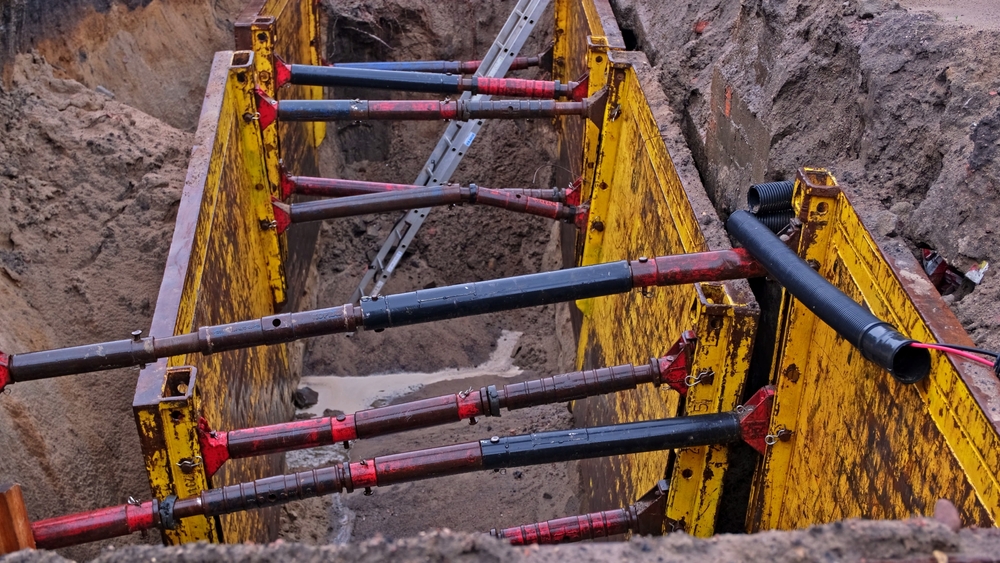
A trench collapse can bury a worker in seconds. A cubic yard of soil can weigh as much as a small car, exposing a trapped worker to crushing pressure, suffocation, and traumatic injury. Proper soil analysis, inspections, and protective systems can prevent many of these accidents.
In our experience handling trench collapse cases across NYC, many accidents involve a protective system that was missing, inadequate for the conditions, or removed before the work was complete.
Schedule a Free Case Evaluation
Why Trench Work Is So Dangerous
- Cave-ins happen without warning: Soil that appears stable can collapse in an instant, giving workers no time to escape.
- The weight is lethal: A worker buried even to the chest faces crushing pressure that can cause suffocation and organ damage.
- Protective systems are required by law: Rule 23-4 and OSHA both require shoring, sloping, or shielding for excavations of sufficient depth.
- Many collapses are preventable: Missing or inadequate protective systems
What Is Industrial Code Rule 23-4?
Industrial Code Rule 23-4 is the subpart of the New York State Industrial Code that governs excavation operations. The rule establishes specific safety requirements for shoring, sloping, and protecting workers in excavations and trenches.
What Does Rule 23-4 Require?
Rule 23-4 addresses the specific hazards of excavation work:
- Shoring and bracing: Requirements for supporting excavation walls to prevent collapse
- Sloping and benching: Requirements for cutting excavation walls back at safe angles
- Access and egress: Requirements for ladders or ramps allowing workers to exit quickly
- Protection from adjacent structures: Requirements to prevent nearby buildings, streets, or utilities from destabilizing the excavation
- Inspection requirements: Requirements for examining excavations for developing hazards
The New York State Department of Labor administers the Industrial Code and enforces it through inspections that generate records used in civil litigation.
How Does Rule 23-4 Work With OSHA Standards?
Federal OSHA regulations under 29 CFR 1926 Subpart P establish excavation requirements involving protective systems, soil evaluation, competent-person inspections, water accumulation, access, and nearby loads.
OSHA requires daily competent-person inspections and additional inspections after rainstorms or other hazard-increasing events. OSHA reports and citations, when issued, may provide evidence concerning site conditions and safety failures. A Labor Law 241(6) claim, however, must be based on a sufficiently specific and applicable New York Industrial Code provision.
What Injuries Result From Trench Collapses?
Trench collapses produce catastrophic injuries because of the weight and speed of the soil. A worker caught in a cave-in faces immediate life-threatening danger.
- Suffocation and asphyxiation: Soil covering the chest prevents the lungs from expanding, causing suffocation within minutes
- Crush injuries: The weight of the soil crushes limbs, the torso, and internal organs
- Traumatic brain injuries: Head trauma from falling soil, rocks, or debris during the collapse
- Spinal cord injuries: Compression and impact injuries that can cause permanent paralysis
- Compartment syndrome and crush syndrome: Complications from prolonged compression that can cause kidney failure and require amputation
- Fatal injuries: Trench collapses can cause fatal crushing and suffocation injuries
According to OSHA, one cubic yard of soil can weigh approximately 3,000 pounds, and a cave-in can prevent a trapped worker's lungs from expanding. The severity of these injuries is why rescue is difficult and prevention matters so much.
How Does New York Law Apply to Trench Collapse Accidents?
Trench collapse accidents on New York sites may support Labor Law claims against property owners and general contractors, product liability claims against protective system suppliers, and workers' compensation claims against the direct employer. The applicable framework depends on the cause of the accident and the parties involved.
| Legal Framework | When It Applies | Standard of Liability |
|---|---|---|
| Labor Law 241(6) | Trench accidents involving sufficiently specific Rule 23-4 violations | Nondelegable duty; comparative fault applies |
| Labor Law 240(1) | Qualifying elevation-related aspects of the excavation accident | Absolute liability for statutory violation causing injury |
| Labor Law 200 | Depends on whether the accident arose from work methods or a premises condition | Common-law negligence |
| Product liability | Defective trench boxes or shoring equipment | Proof of defect and causation |
Labor Law 241(6) and Rule 23-4
Section 241(6) is often the primary legal theory in trench collapse cases. Certain concrete and applicable provisions within Rule 23-4 may support a claim, including requirements governing shoring, sloping, bracing, access, and excavation protection.
The worker must show that the cited provision was sufficiently specific, applied to the excavation and hazard, was violated, and contributed to the injury. Not every provision within Rule 23-4 is specific enough to support Section 241(6) liability.
Labor Law 240(1) in Excavation Cases
Section 240 may apply to an excavation accident when the injury results from a qualifying elevation-related risk and an appropriate safety device was missing or inadequate. A fall into a trench does not automatically create a Section 240 claim. Courts examine the depth, the worker's position, the work being performed, and whether a guardrail, ramp, hoist, or other statutory safety device was required. Section 240 may also apply when material being hoisted or secured, or material that required securing for the work, falls into an excavation because an appropriate safety device was absent or inadequate.
Labor Law 200 Standards
Section 200 claims follow different standards depending on the cause of the accident. When the injury arises from the means and methods of the excavation work, the plaintiff generally must prove that the defendant supervised or controlled the injury-producing work.
When the accident arises from a dangerous premises condition, the plaintiff generally must prove that the defendant created the condition or had actual or constructive notice of it.
Who Is Liable in a Trench Collapse Case?
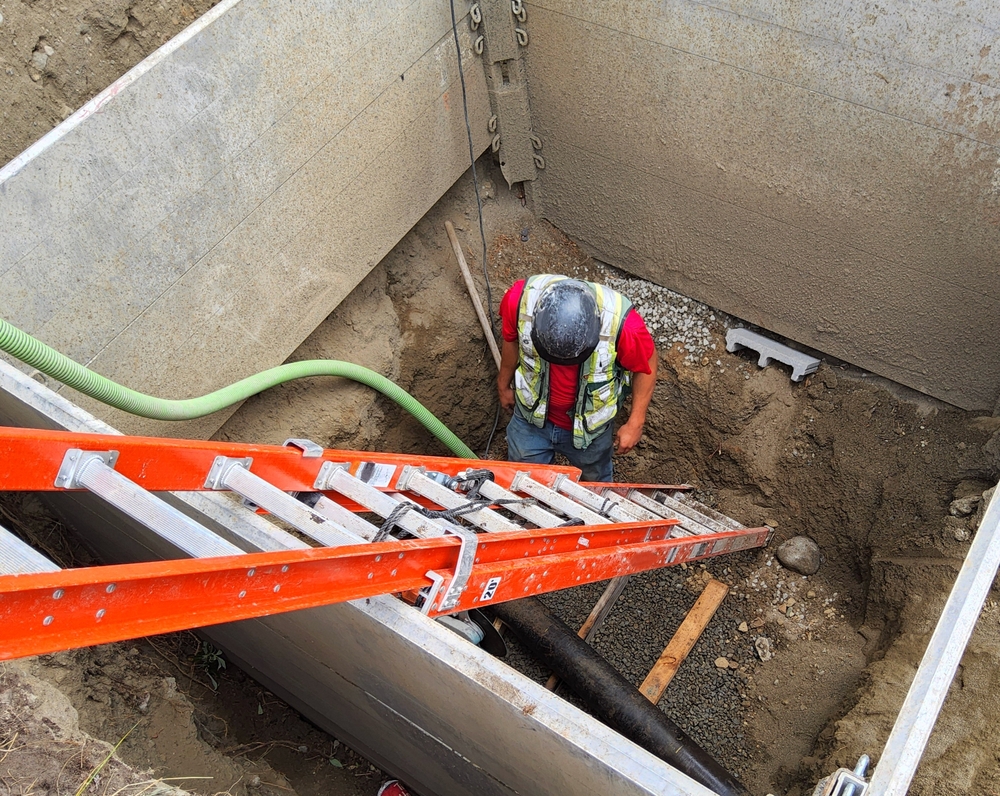
Liability in a trench-collapse case may lie against several parties. A trench collapse lawyer in New York typically investigates multiple defendants under different legal theories.
Property Owners and General Contractors
Owners and general contractors may face Labor Law 241(6) liability when a sufficiently specific Rule 23-4 violation contributed to the collapse. Section 240 may also apply when the accident involved a qualifying elevation-related hazard. Sections 240 and 241(6) impose nondelegable duties. Certain one- and two-family homeowners are exempt when they do not direct or control the work.
Excavation Subcontractors
An excavation subcontractor that is not the injured worker's employer may face liability when its negligence contributed to the accident. A subcontractor may also qualify as a statutory agent under the Labor Law when it had authority to supervise or control the injury-producing work. Workers' compensation is generally the exclusive remedy against the worker's direct employer.
Engineers and Equipment Manufacturers
Engineers are generally not liable under Labor Law 240 or 241 when their involvement is limited to planning and design and they do not direct or control the work. They may still face professional negligence liability when a defective soil analysis, excavation plan, or shoring design contributed to the collapse.
When a defective trench box, shoring component, or other protective product contributed to the collapse, the manufacturer or another company in the product's distribution chain may face a product liability claim. The worker must still prove a legally recognized defect and causation.
What Compensation Is Available After a Trench Collapse?
An excavation cave-in injury attorney in NYC pursues compensation in three categories: workers' compensation benefits, third-party Labor Law lawsuit damages, and product liability damages when defective equipment contributed to the accident. The available recovery depends on the severity of the injury and the parties responsible.
Workers' Compensation Benefits
Workers' compensation pays medical bills and a portion of lost wages regardless of fault. According to the New York State Workers' Compensation Board, benefits are calculated as two-thirds of the worker's average weekly wage multiplied by the percentage of disability, subject to minimum and maximum limits. The system does not pay for pain and suffering or full lost earnings.
Third-Party Labor Law and Product Liability Damages
A third-party Labor Law lawsuit against a property owner, general contractor, statutory agent, or other non-employer party may allow the worker to seek past and future medical expenses, lost earnings, diminished earning capacity, pain and suffering, and loss of enjoyment of life.
A separate product liability claim may be available when defective protective equipment contributed to the collapse. If the accident kills a worker, eligible family members or the estate may have wrongful death and survival claims.
Frequently Asked Questions About Trench Collapse Accidents in New York
How long do I have to file a trench accident lawsuit in New York?
Most New York trench accident lawsuits must be filed within three years. Claims against New York City, NYCHA, the MTA, and many other public entities may require a Notice of Claim within 90 days. Port Authority claims follow different rules, including a one-year filing deadline and notice at least 60 days before the lawsuit begins.
What depth of excavation requires a protective system?
Under OSHA standards, an excavation five feet deep or greater generally requires a protective system unless it is made entirely in stable rock. Shallower excavations also require protection when a competent person identifies a potential cave-in hazard. New York Rule 23-4 may impose additional requirements in certain excavations more than three feet but less than five feet deep, depending on the soil and whether a qualified designated person has certified the sides as stable.
Can I file a claim if I am undocumented or was paid in cash?
Undocumented workers can generally pursue New York workplace injury claims. Immigration status alone does not automatically bar compensation, although work authorization, wage records, and the use of false documents can affect a lost-earnings claim. Cash payment does not bar the claim but may complicate the proof of lost earnings.
What if the trench looked safe before it collapsed?
Trenches that appear stable can collapse without warning, which is one reason the law requires protective systems and inspections. The fact that the trench looked safe does not by itself defeat the claim. A central question is whether the required protective system was in place and whether the excavation was properly evaluated and inspected.
Who investigates a trench collapse accident?
Serious trench collapses may be investigated by OSHA, the New York City Department of Buildings, and other agencies, depending on the location and circumstances. OSHA requires employers to report certain fatalities and severe injuries.
The injured worker's attorney should also conduct an independent investigation, preserve evidence, and retain engineering professionals to analyze the soil conditions and protective systems.
When the Protection the Conditions Required Was Not There
Trench collapses are often preventable when the soil is properly evaluated and workers receive the protective systems the conditions require. When inadequate shoring, sloping, shielding, or inspection contributes to a collapse, New York law may provide claims against the parties responsible for excavation safety.
Which specific Rule 23-4 provisions apply to any given collapse depends on the facts, and not every provision supports a Section 241(6) claim. Whether Labor Law 240 also applies depends on the elevation-related aspects of the accident.
If you or someone you know was injured in a trench or excavation collapse on a NY construction site, the attorneys at Washor Kool Sosa Maiorana & Schwartz, LLP can review the facts and explain what protections apply.
Call (212) 406-1700 for a free case evaluation.