If you have lived through a scaffold collapse, you already know what most people never have to know: how fast it happens, how loud it is, how completely it changes the year that comes after.
Our scaffold accident lawyers in New York at Washor Kool Sosa Maiorana & Schwartz, LLP handle these cases across Brooklyn, Queens, Manhattan, the Bronx, Staten Island, Westchester, Nassau, and Suffolk counties.
New York's Scaffold Law gives injured construction workers some of the strongest protections in the country. The cases routinely recover far more than what workers' compensation alone will pay, especially when the injury involves brain damage, spinal cord damage, or wrongful death.
Schedule a Free Case Evaluation
Get a Scaffold Law Case Review in 24 Hours
You do not need to know whether the Scaffold Law applies before you call. That is our job. Tell us what happened, and our attorneys will review the facts, identify the responsible parties, and tell you what the case may be worth.
Call (212) 406-1700 to speak with an attorney.
Which Types of Scaffolds Fail Most on NYC Job Sites?
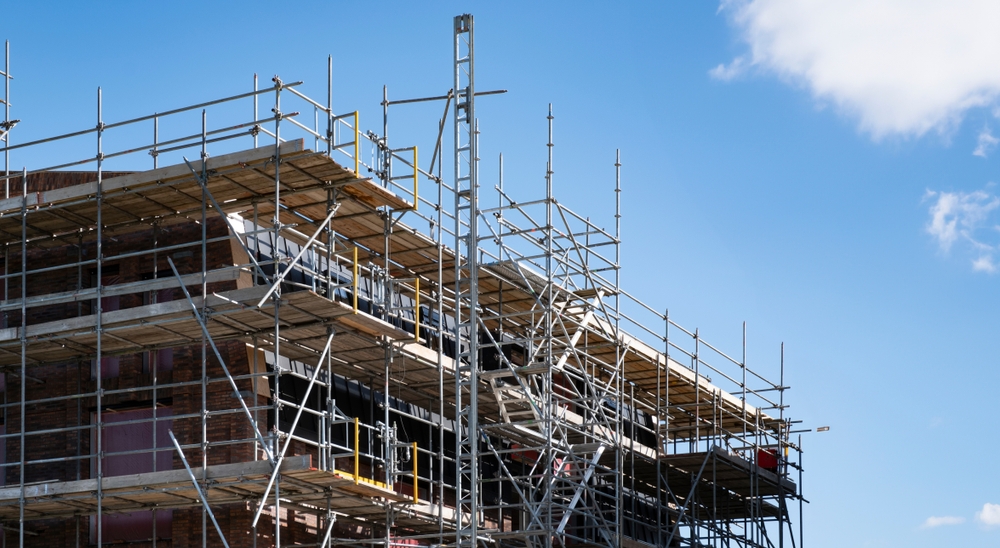
Five scaffold types account for nearly all NYC scaffold accidents: supported frame scaffolds (the most common), suspended swing stages, mast climbers, aerial lifts, and sidewalk sheds. Each fails in its own pattern and brings its own set of liable parties.
Supported scaffolds (frame and pipe)
Frame and pipe scaffolds are the steel structures that wrap building facades and rise from sidewalks. They fail when the base is unstable, the cross-bracing is missing, the planking gives way, or the load exceeds the rated capacity. Most NYC scaffold injuries involve this type.
Suspended scaffolds (swing stages)
Swing stages hang from the roof on cables and rigging, used by window washers, facade repair crews, and exterior masonry workers. When a cable snaps, a counterweight shifts, or the rigging fails, the platform drops the full height of the building. The injuries are almost always catastrophic.
Mast climbing work platforms
Mast climbers rise and lower along a vertical mast attached to the building. They fail through hydraulic problems, control system errors, or anchor failure where the mast attaches to the facade. Workers on a mast climber can be stranded, dropped, or crushed when the platform malfunctions.
Aerial lifts and scissor lifts
Aerial lifts and scissor lifts are mobile platforms that elevate workers without a fixed scaffold structure. Tipovers, hydraulic failures, and contact with overhead power lines cause the most serious accidents, often catching the operator off guard.
Sidewalk shed scaffolds
NYC requires sidewalk sheds around buildings under repair or construction. When the shed is improperly erected or struck by falling debris from above, it can injure both the workers above and the pedestrians below, opening up overlapping claims under different sections of the law.
Why Are NYC Scaffold Accidents Different from Other Construction Injuries?
Scaffold accidents differ from other construction injuries in four ways: more workers hurt per incident, more catastrophic injury patterns, more defendants per case, and more direct Scaffold Law application. Each of those differences shapes how the case is built and what the recovery ends up looking like.
Multiple workers are often hurt at the same time
A ladder fall injures one worker. A scaffold collapse can injure five, ten, or more. Multi-victim cases require coordinated investigation, parallel claims, and combined settlement strategy to push each worker's recovery to its full value.
The injuries are usually catastrophic
Scaffold heights and falling materials produce injuries that go beyond a single body system. Brain injury combined with spinal damage. Multiple fractures alongside internal trauma. Many scaffold accident clients face permanent disability and lifetime care needs.
More parties are responsible than in most construction cases
A typical NYC scaffold project involves the property owner, the general contractor, the scaffold erection company, the scaffold rental supplier, and the worker's direct employer. Each carries its own insurance, its own attorneys, and its own theory of why someone else is at fault.
The Scaffold Law applies more directly than to most other claims
Scaffolds are specifically named in Labor Law § 240. When a worker is hurt because a scaffold failed, the law applies without much room for argument. That is a very different legal landscape than ordinary negligence cases.
How Does the New York Scaffold Law Protect Scaffold Workers?
The Scaffold Law protects scaffold workers by placing strict liability on contractors and owners for height-related failures, blocking most insurance defenses, and barring the use of comparative fault to reduce recovery. Labor Law § 240 names scaffolds by type as protected safety equipment.
How does strict liability change a scaffold case?
In ordinary New York negligence cases, the worker has to prove the contractor was careless and that the carelessness caused the injury. The Scaffold Law cuts that down. If the scaffold failed or was missing required safety equipment, the contractor and owner are liable.
Does the worker's fault reduce a Scaffold Law recovery?
Almost never. In most New York injury cases, the worker's share of fault reduces the recovery proportionally. Scaffold Law claims are an exception. Even if the worker contributed to the fall, the carelessness of the contractor or owner usually controls the outcome.
Who Is Responsible When a NYC Scaffold Fails?
Five parties typically share responsibility when a NYC scaffold fails: the property owner, the general contractor, the scaffold erection company, the scaffold manufacturer or rental supplier, and any other subcontractors whose actions contributed to the failure.
The property owner
Owners control the project and chose the contractors who would build, run, and use the scaffold. Under the Scaffold Law, owners are strictly liable for scaffold failures even when they delegated everything to a general contractor.
The general contractor
GCs run the day-to-day site and are responsible for enforcing safety rules across all subcontractors. They also typically hold the master liability policy that covers most scaffold claims, which is usually where the recovery comes from.
The scaffold erection company
Scaffold erectors are the subcontractors who actually build, inspect, and dismantle the scaffolds. When their assembly work causes the failure, they face direct liability separate from the GC and the property owner.
The scaffold manufacturer or rental supplier
A defective component, such as a broken plank, a cracked frame, or a failed cable, makes the manufacturer or rental supplier a defendant in a product liability claim that runs alongside the Scaffold Law claim.
Which scaffold types are tied to which liable parties?
| Scaffold Type | How It Typically Fails | Most Likely Responsible Party |
|---|---|---|
| Frame and pipe scaffold | Improper assembly; missing bracing | Scaffold erector; general contractor |
| Suspended swing stage | Cable failure; rigging defects | Rigging contractor; manufacturer |
| Mast climber | Hydraulic failure; control system error | Manufacturer; operator/employer |
| Aerial or scissor lift | Tipover; contact with overhead power lines | Rental company; general contractor |
| Sidewalk shed | Improper bracing; struck by falling debris | Scaffold erector; general contractor |
What Makes a Scaffold Accident Case Worth More Than Workers' Comp?
Scaffold accident cases recover seven or eight figures because the Scaffold Law eliminates most fault disputes, the injuries are usually catastrophic, and the defendants carry deep insurance coverage. Four damage categories drive the recovery.

Why does future medical care drive the biggest numbers?
Scaffold accident injuries often need years or decades of care. A 35-year-old construction worker with a spinal cord injury may need millions in lifetime medical support. Workers' compensation does not pay for this. A Scaffold Law claim does.
How much does lost earning capacity add to a scaffold case?
Carpenters, ironworkers, electricians, and other skilled trades earn well in NYC. A career-ending scaffold injury for a worker in their 30s can mean many years of lost income to recover. Lost earning capacity is often the second-largest line item on a scaffold case.
What is pain and suffering worth in a scaffold injury case?
New York juries award pain and suffering damages separately for past physical pain, present limitations on daily life, and projected future pain. Catastrophic scaffold injuries support significant awards on each category, often combining to seven figures.
Can a family file a wrongful death claim after a scaffold accident?
Yes. When a scaffold accident kills a worker, the family files the claim under New York's wrongful death statute. Recoverable damages include funeral costs, lost financial support, loss of services, and loss of parental guidance for surviving children.
Find Out What Your Scaffold Case Is Worth
Most scaffold accident victims accept settlement offers that are a fraction of what their case is worth. The insurance carrier knows that. Our attorneys know what catastrophic scaffold injuries actually pay in New York courts, and we do not accept offers that ignore that.
Call (212) 406-1700 for a case value assessment.
Why Choose Our New York Scaffold Accident Lawyers at Washor Kool Sosa Maiorana & Schwartz, LLP?
Our New York scaffold accident lawyers handle scaffold accident cases through three commitments: direct attorney attention from intake through trial, working relationships with the engineering witnesses who testify on scaffold failures, and pursuit of every responsible party from property owner to scaffold manufacturer.
Our attorneys' track record in scaffold cases covers supported frame collapses, swing-stage drops, and mast climber failures across the five boroughs. Catastrophic scaffold settlements in NYC routinely land in the seven- to eight-figure range, and those numbers anchor our negotiations.
In our experience, the strongest scaffold cases turn on whether the contractor can produce inspection records dated before the accident. Missing or backdated paperwork is what locks in Scaffold Law strict liability and pushes the carrier toward a real settlement.
Attorney experience in height-related construction injury cases
Our attorneys have recovered over $1 billion for injured clients and their families. Scaffold accidents and other Scaffold Law claims make up a substantial share of that record.
Direct attorney attention from start to finish
Scaffold accident clients work directly with our attorneys. Major decisions, deposition prep, and settlement negotiations stay with the lawyers who will try the case if it goes that far.
Working relationships with the engineering witnesses in scaffold cases
Scaffold cases often come down to testimony from engineers, safety analysts, and OSHA investigators. Our attorneys have working relationships with the people who provide that testimony, and we know how to put their work in front of a jury.
Manhattan scaffold injury lawyers serving all five boroughs
Our Manhattan scaffold injury lawyers handle cases across Brooklyn, Queens, the Bronx, Staten Island, Westchester, Nassau, and Suffolk. We know the local courts, the carriers, and the contractors who repeat the same failures from one project to the next.
Frequently Asked Questions About New York Scaffold Accident Claims
Can I sue if the scaffold I fell from belonged to a different contractor?
Scaffold accident liability does not depend on who owned the equipment or who employed the injured worker. The Scaffold Law applies to the contractors and property owners with control over the work, and a separate product liability claim may apply if the scaffold itself was defective.
What if I was injured by a falling scaffold while walking on the sidewalk?
You may have a claim, but it is not a Scaffold Law claim. Pedestrian injuries from falling scaffolds fall under ordinary New York negligence law against the contractor, property owner, and scaffold erector who failed to secure the structure or the debris netting above.
How do you prove a scaffold was defective if it was already taken down?
Investigators on our team move fast to obtain photographs, witness statements, OSHA reports, and the contractor's own incident records before evidence disappears. The U.S. Occupational Safety and Health Administration inspection records are particularly useful in proving the conditions that caused the failure.
How long do I have to file a scaffold accident lawsuit in New York?
Most New York personal injury cases must be filed within three years. Claims involving city or state agencies, like the New York City Housing Authority or the Port Authority, have much shorter deadlines, sometimes 90 days. Coordinate with the New York State Workers' Compensation Board on benefits, but call an attorney first.
File Your Scaffold Accident Claim Before the Deadline
New York's statute of limitations on personal injury cases is generally three years from the accident. Notice-of-claim deadlines for cases involving city or state agencies can be as short as 90 days. Waiting can permanently cost you the right to recover.
Call (212) 406-1700 to start your case today.
Schedule a Free Case Evaluation
Washor Kool Sosa Maiorana & Schwartz, LLP
The Woolworth Building
233 Broadway, 18th Floor
New York, NY 10279