
A worker crushed by heavy equipment on a NYC construction site does not get time to think about what comes next. The hospital stay, the missed paychecks, the family trying to figure out how to keep going — all of it starts before the injured worker has any answers. The spotter wasn't there. The view was blocked. The backup alarm didn't sound. Every one of those decisions belonged to someone else.
When you need a heavy equipment accident lawyer, our attorneys at Washor Kool Sosa Maiorana & Schwartz, LLP can help.
Heavy equipment on NYC construction sites can weigh 40 tons or more. Excavators swing 360 degrees with loads suspended feet above workers. Bulldozers push through debris fields where visibility drops to nothing. Backhoes operate near open trenches and utility work.
The margin for error is thin, and when the safety systems fail, our firm builds cases against the parties responsible — the property owner, the general contractor, the equipment manufacturer — not the worker who was doing the job.
Schedule a Free Case Evaluation
Talk to a Heavy Equipment Accident Lawyer Before the Insurance Adjuster Calls
The general contractor's insurance carrier will start collecting statements within hours of the accident. The injured worker is often the only person on site without legal representation. Speak with a construction equipment injury lawyer in NY before you talk to anyone from the insurance side.
Call (212) 406-1700 for a free case review.
What Counts as a Heavy Equipment Accident in New York?
A heavy equipment accident is any injury caused by construction equipment during operation, maintenance, transport, or use on a New York construction site. The category covers excavators, bulldozers, backhoes, cranes, front-end loaders, skid steers, graders, compactors, and other powered construction machinery.
What kinds of heavy equipment accidents happen most often?
- Struck-by incidents: Workers hit by moving equipment, swinging booms, or components in blind spots
- Caught-between accidents: Workers pinned between equipment and walls, other vehicles, or fixed structures
- Crushed-by incidents: Workers compressed under falling loads, tipped equipment, or collapsed materials
- Rollovers and tip-overs: Equipment failure on slopes, uneven ground, or during overloaded operations
- Underground utility strikes: Excavation equipment hitting gas lines, water mains, or electrical infrastructure
- Trench collapses during equipment work: Workers buried when excavation walls fail during backhoe or excavator operation
Each accident type has its own investigation focus and its own liability analysis.
Why Do NYC Heavy Equipment Accidents Happen?
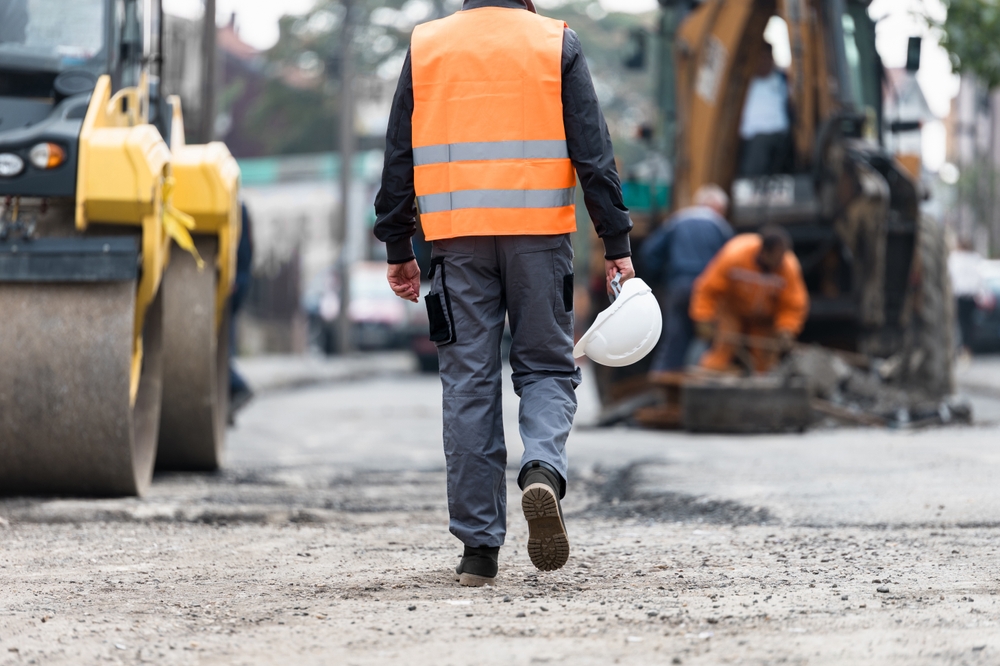
Most NYC heavy equipment accidents share a small set of causes that often combine in the same incident.
Operator visibility and blind spots
Excavators, bulldozers, and backhoes have significant blind spots. Operators cannot see behind the equipment when backing up, cannot see workers in the swing radius when rotating, and cannot see the immediate area during forward movement. When spotters, backup alarms, or traffic controls are missing, struck-by accidents may follow.
Missing site coordination and operator training
Large NYC construction sites involve multiple trades working simultaneously. When the general contractor fails to coordinate equipment operation with other trade activities, workers end up in the swing radius or fall zone of active equipment. OSHA requires operators to be trained and qualified for the specific equipment they operate. When employers put untrained workers on equipment to save time, the risk of accidents rises significantly.
Equipment defects and ground conditions
Defective brakes, failed hydraulic systems, damaged backup alarms, and missing ROPS all contribute to heavy equipment accidents. Operating on unstable ground, near open excavations, or on slopes beyond the equipment's rated capacity produces tip-overs and rollovers. Site conditions belong to management, not the operator.
What Injuries Do Heavy Equipment Accidents Cause?
Heavy equipment accidents produce catastrophic injuries because of the forces involved.
- Traumatic brain injuries: Head impact from equipment contact, rollovers, or swinging components
- Spinal cord injuries: Vertebral fractures, herniated discs, and permanent paralysis from crush events
- Crush injuries and amputations: Compression trauma when workers are caught between equipment and fixed objects
- Internal organ damage: Blunt force trauma to the chest, abdomen, or pelvis
- Multiple fractures: Broken bones throughout the body from crush events and struck-by incidents
- Burns and electrocution: Chemical burns from hydraulic fluid, electrical burns from struck utility lines
- Fatal injuries: Heavy equipment accidents produce a significant share of construction fatalities each year
How Does New York Law Apply to Heavy Equipment Accidents?
Heavy equipment accidents on New York construction sites may support Labor Law claims against property owners and general contractors, product liability claims against manufacturers, and workers' compensation claims against the direct employer.
| Legal Framework | When It Applies | Standard of Liability |
|---|---|---|
| Labor Law 240(1) | Elevation-related equipment accidents involving falling loads | Strict liability |
| Labor Law 241(6) | Accidents involving specific Industrial Code violations | Nondelegable duty; comparative fault applies |
| Labor Law 200 | Owner or GC had control over the work or notice of the hazard | Common-law negligence |
| Product liability | Defective equipment components or design | Proof of defect and causation |
Labor Law 240(1), 241(6), and 200
Section 240(1) may apply when a worker is injured by an elevation-related hazard, such as a falling load from an excavator bucket. Section 241(6) requires proof of a specific Industrial Code violation, most often under 12 NYCRR 23-9, which addresses power-operated equipment including excavators, bulldozers, and backhoes. Section 200 addresses unsafe conditions and negligent supervision or control by the property owner or general contractor.
OSHA Standards
Federal OSHA regulations under 29 CFR 1926 Subpart O set requirements for motor vehicles and mechanized equipment. OSHA violations create records used as evidence in state court lawsuits, even though OSHA itself does not typically provide a direct right of action.
Who Is Liable in a Heavy Equipment Accident Case?
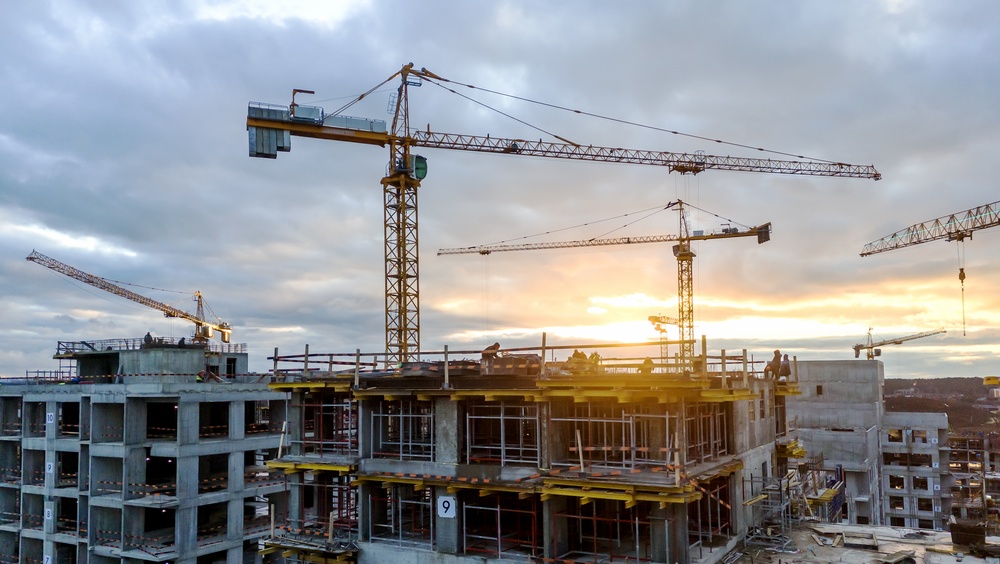
Liability depends on the setting, the cause of the accident, and the parties involved. Multiple parties often share responsibility.
Property owners and general contractors
On construction sites, property owners and general contractors may face Labor Law 240(1), 241(6), and 200 liability when Industrial Code violations, elevation-related hazards, or unsafe conditions contributed to the accident. The duty is nondelegable.
Equipment operators' employers and manufacturers
When the operator worked for a different company than the injured worker, the operator's employer may face direct negligence claims. When the operator and injured worker shared the same employer, workers' compensation exclusivity ordinarily prevents a direct lawsuit against that employer. Manufacturers may face product liability claims when defective brakes, hydraulic systems, backup alarms, or ROPS contributed to the accident.
Maintenance, rental companies, and subcontractors
Companies that maintained, serviced, or rented the equipment may face liability when their work contributed to the mechanical failure. Subcontractors whose work created the hazardous condition, whose workers operated the equipment, or whose supervision failed may face direct negligence claims.
What Types of Heavy Equipment Are Involved in NYC Accidents?
NYC construction sites use a wide range of heavy equipment. Each type has its own accident patterns.
Excavators, backhoes, and bulldozers
An excavator accident lawyer in New York typically investigates cases involving swing radius injuries, bucket falls, tip-overs on unstable ground, and underground utility strikes. A backhoe accident lawyer in New York handles similar cases along with accidents during trench excavation and utility work. A bulldozer accident attorney in NYC handles cases involving struck-by incidents, tip-overs, and rollovers during debris clearing and site preparation.
Cranes, loaders, and specialized equipment
Crane accidents include tip-overs, load drops, rigging failures, and contact with power lines. These cases often involve multiple defendants including the crane owner, the operator's employer, the rigging contractor, and the equipment manufacturer.
Front-end loader accidents often involve load-stability failures and blind-spot incidents. Compactors, graders, and specialized equipment each exhibit distinct accident patterns and are subject to different regulations under Industrial Code Rule 23.
What Compensation Can a Heavy Equipment Accident Lawyer Recover?
A heavy equipment accident lawyer pursues compensation through a third-party Labor Law lawsuit against the property owner, general contractor, and other non-employer parties, along with a product liability claim when defective equipment contributed to the accident. The firm pursues these third-party claims beyond any workers' compensation claim the injured worker may have.
Third-Party Labor Law Damages
The Labor Law lawsuit may allow an injured worker to seek past and future medical expenses, lost earnings, diminished earning capacity, pain and suffering, and loss of enjoyment of life.
Heavy equipment cases involving catastrophic injuries may support substantial recoveries because damages can include lifelong medical care, diminished earning capacity, pain and suffering, and permanent disability.
Product Liability Damages
When defective equipment components or design defects contributed to the accident, the manufacturer or another company in the product's distribution chain may face a product liability claim alongside the construction defendants. The worker must still prove a legally recognized defect and causation. Product liability claims often add a significant source of recovery in serious cases.
Wrongful Death Damages
When a heavy equipment accident kills a worker, eligible family members or the estate may have wrongful death and survival claims under New York law. These claims may allow recovery for funeral costs, lost financial support, and loss of guidance for surviving children.
Heavy Equipment Evidence Disappears Within Days
The equipment is returned to the rental yard, sent to the manufacturer for repair, or continues operating normally. Maintenance records get updated. Inspection logs get modified. Surveillance footage gets overwritten. Move fast to preserve the evidence.
Call (212) 406-1700 to send preservation letters today.
Schedule a Free Case Evaluation
Why Choose Our New York Heavy Equipment Accident Lawyers at Washor Kool Sosa Maiorana & Schwartz, LLP

In our experience handling heavy equipment accident cases across NYC, the strongest cases combine three elements: early preservation of the equipment and site records, thorough investigation of operator training and certification, and damages preparation that anticipates the long-term medical picture.
Spanish-speaking lawyers who know the trades
Many NYC heavy equipment accidents involve workers whose first language is Spanish. Our attorneys speak with workers directly in Spanish and understand the trade terminology for heavy equipment operations, safety practices, and site layouts. That direct communication moves the investigation faster than it would through an interpreter.
Experience with construction-site heavy equipment claims
Our attorneys handle heavy equipment accidents on NYC construction sites and understand how Labor Law 240(1), 241(6), 200, the Industrial Code, and OSHA standards interact with these cases. Construction equipment injury lawyer NY cases often involve multiple defendants and layered insurance coverage.
Investigation that starts on day one and direct attorney attention
When clients call our firm after a NYC heavy equipment accident, investigators are dispatched the same day. Our attorneys have recovered over $1 billion for injured clients and their families. Strategic decisions, depositions, and settlement negotiations stay with the partners actually handling the case.
Frequently Asked Questions About NYC Heavy Equipment Accident Claims
How long do I have to file a heavy equipment accident lawsuit in New York?
Most New York heavy equipment accident lawsuits must be filed within three years of the accident. Claims against NYC, NYCHA, the MTA, the Port Authority, or other government entities require a Notice of Claim within 90 days.
Can I sue the operator's employer if the operator caused the accident?
When the operator worked for a different company than the injured worker, the operator's employer may face direct negligence claims. When the operator and injured worker shared the same employer, claims against the property owner, general contractor, or equipment manufacturer may still proceed. The third-party lawsuit is where the injured worker pursues damages the Labor Law provides for.
Can I file a claim if I am undocumented or was paid in cash?
Undocumented workers can generally pursue New York workplace injury claims. Immigration status alone does not automatically bar compensation, although work authorization, wage records, and whether false documents were used can affect a lost-earnings claim. Cash payment does not bar the claim but may complicate the proof of lost earnings.
What if the equipment belonged to my employer?
The fact that your employer owned the equipment does not automatically prevent a Labor Law claim against a property owner or general contractor. Liability depends on the work being performed, the defendants involved, the applicable safety provision, and what caused the accident. A separate product liability claim may also exist if defective equipment contributed to the injury.
What if the operator did not have proper certification?
Operator certification failures often support claims against the operator's employer for negligent hiring, training, and supervision. The property owner and general contractor may also face liability for failing to verify certifications before allowing equipment operation on the site.
Get Your NYC Heavy Equipment Accident Case Started Today
The case review is free. We pay all case costs upfront. You owe nothing unless we recover money for you. Heavy equipment evidence disappears within days, so early investigation matters most.
Call (212) 406-1700 to get started.