What can injured workers do after a scaffold accident on a New York construction site?
A scaffold fall accident in New York often triggers strict liability under Labor Law 240, which allows the worker to sue the property owner and general contractor for full damages. The case can cover pain and suffering, lost wages, and lifetime medical costs beyond what workers' compensation pays.
Quick Facts
- Three-year filing deadline: Most scaffold fall lawsuits must be filed within three years, with shorter deadlines for government entity defendants.
- Strict liability applies: Labor Law 240 holds property owners and general contractors responsible for most scaffold fall and collapse cases, even when the worker made mistakes.
- Workers' compensation is not the limit: A third-party lawsuit against the owner and contractor can recover pain and suffering, full lost wages, and future medical care beyond workers' compensation benefits.
- Cash payment and immigration status do not matter: Workers paid in cash, given a 1099, or working without documentation can still file scaffold fall lawsuits in New York.
- Evidence disappears quickly: Damaged scaffolds get removed, surveillance footage gets overwritten, and witnesses move on. Early investigation protects the case.
These takeaways apply to most New York scaffold cases, but the specific facts of the site, the equipment, and the parties involved determine the value of each case.
A scaffold fall accident New York construction workers suffer on the job often produces serious, life-changing injuries: broken bones, spinal damage, traumatic brain injuries, and in the worst cases, paralysis or death.
New York Labor Law gives these workers some of the strongest legal protections in the country. Scaffold accident lawyers handle these claims because the rules differ from ordinary personal injury cases and the deadlines move fast.
Scaffold accidents on NYC construction sites happen for predictable reasons: missing guardrails, defective brackets, improper securing, overloading, or failure to provide harnesses and anchor points.
When the safety equipment that should have been in place was not, the law shifts the cost of the injury to the parties responsible for the work site.
What Counts as a Scaffold Fall Accident in New York?
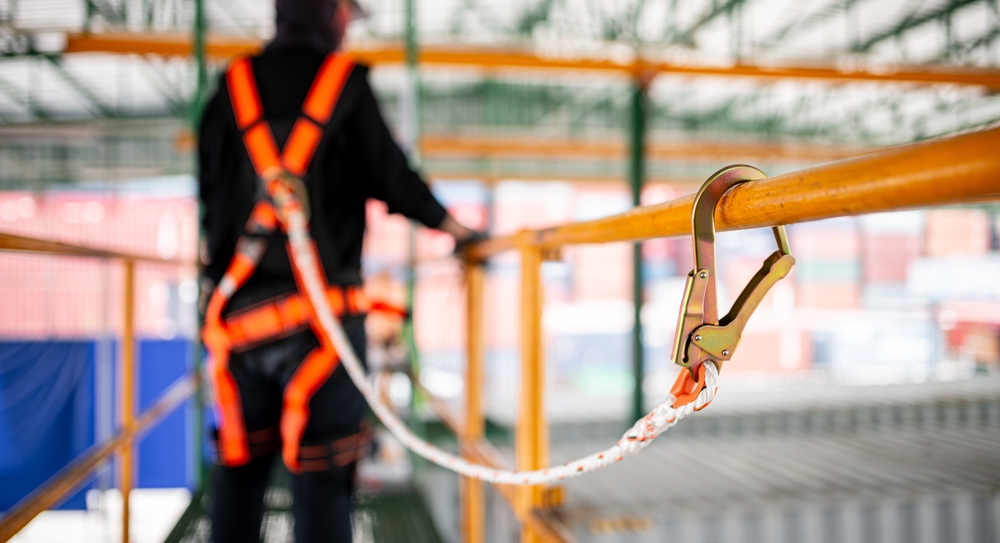
A scaffold fall accident under New York Labor Law includes any incident where a worker falls from a scaffold, the scaffold collapses, or the worker falls through gaps in the scaffold's planking. The law treats these accidents as elevation-related claims when proper safety devices were not provided.
What types of scaffolds are involved?
NYC construction sites use several scaffold types, each with its own accident profile:
- Supported scaffolds: Built from the ground up using poles, frames, or outriggers; failures usually involve collapse, missing planks, or absent guardrails
- Suspended scaffolds: Hung from above by ropes or cables; failures involve cable breaks, hoist malfunctions, or improper rigging
- Aerial lifts and mobile scaffolds: Powered platforms that move workers vertically; failures involve tip-overs, mechanical issues, or unsecured wheels
- Pump jack scaffolds: Adjustable platforms used in lower-rise residential work; failures involve bracket failure or unstable base
- Tube and coupler scaffolds: Built from metal tubes and couplers for irregular structures; failures involve loose connections or missing braces
Each scaffold type produces a different accident pattern, but the underlying legal question is the same: did the responsible parties provide proper protection from the gravity-related risk?
What is a scaffold collapse accident NYC workers commonly face?
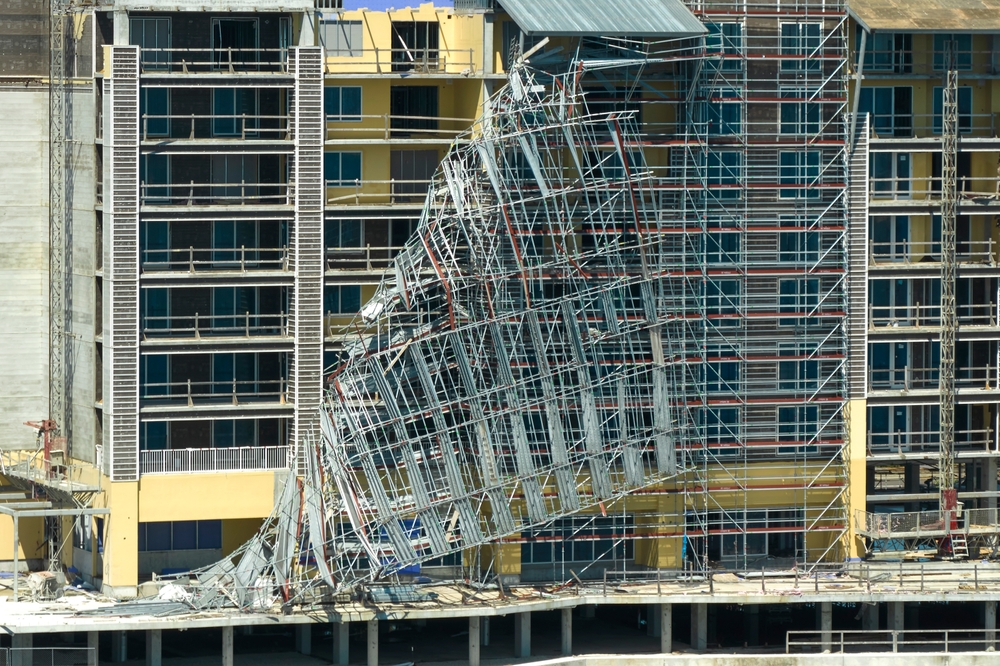
A scaffold collapse accident NYC construction workers face involves the partial or complete failure of the scaffold structure. Common collapse scenarios include base failure on uneven ground, overloading beyond the rated capacity, missing or defective braces, improper tie-ins to the building, and weather-related failures from wind or ice loading.
What Does Labor Law 240 Do for Scaffold Fall Cases?
Labor Law 240, often called the Scaffold Law, imposes strict liability on property owners and general contractors when a scaffold accident happens because proper safety devices were not provided. Strict liability means the injured worker does not have to prove the defendants were negligent or knew about the problem.
| Element | What the Worker Must Prove | What the Worker Does NOT Have to Prove |
| Elevation-related risk | The work involved a gravity-related hazard | Specific notice to the defendant |
| Safety device failure | The provided device failed to protect, or no device was provided | That the defendant was negligent |
| Causation | The safety failure contributed to the injury | That the worker was free from fault |
| Covered work | The activity was construction, demolition, or repair | That a written contract existed |
Why is strict liability so important?
Strict liability changes the math of the case. In a regular negligence case, the injured person must prove the defendant did something wrong. Under Labor Law 240, the worker only needs to prove the scaffold accident occurred and proper safety devices were not provided. The failure of protection establishes liability against the property owner and general contractor.
Does the worker's own conduct reduce recovery?
Generally, no. The worker's own mistakes do not reduce recovery under Labor Law 240's strict liability rule. The only narrow exception is when the worker was the sole proximate cause of the injury, which happens rarely in scaffold cases. Most scaffold fall cases produce full recovery even when the worker contributed to the accident.
Who Is Liable in a New York Scaffold Fall Case?
Liability in a New York scaffold fall case can fall on the property owner, the general contractor, the scaffolding subcontractor, equipment manufacturers, and other parties. The law's non-delegable duty rule means owners and contractors cannot pass off responsibility by claiming someone else was supposed to handle safety.
How is the property owner liable?
The owner of the property where construction occurs is liable under Labor Law 240 even when the owner hired a general contractor and had no direct involvement in the work. Owners of one- and two-family residential homes have a limited exception if they did not direct or control the work, but commercial property owners and larger residential building owners face full liability.
When is the general contractor liable?
The general contractor managing the project is liable under Labor Law 240 when a scaffold accident occurs and proper safety devices were not provided. The contractor's liability cannot be transferred through contract language to subcontractors. The non-delegable duty stays with the parties named in the statute.
What about the scaffolding subcontractor?
Scaffolding subcontractors that built, supplied, or maintained the scaffold can face separate negligence claims when their work contributed to the accident. These claims run alongside Labor Law 240 claims against the owner and general contractor, often producing multiple sources of insurance coverage for serious cases.
Can equipment manufacturers be liable?
Yes. When defective scaffolding components, planks, brackets, or accessories contributed to the accident, the manufacturer can face product liability claims. These cases often turn on whether the equipment was defective when it left the manufacturer or whether it failed because of improper assembly or maintenance.
What Damages Can a Scaffold Accident Lawyer New York Workers Trust Help You Recover?
A scaffold accident lawyer New York workers trust can help injured workers and their families recover the full range of damages New York law allows: medical expenses, lost wages, lost earning capacity, pain and suffering, loss of enjoyment of life, and in the worst cases, wrongful death damages.
Past and future medical expenses
Recovery covers emergency room care, surgery, hospitalization, physical therapy, rehabilitation, medication, assistive equipment, home modifications, and projected future medical costs. Serious scaffold fall injuries that produce permanent disability can generate seven-figure medical damages alone.
Lost wages and lost earning capacity
Lost income covers paychecks missed during recovery and reduced future earnings when scaffold fall injuries prevent return to construction work. For workers whose bodies are their tools, lost earning capacity is often the largest single damages category in the case.
Pain and suffering and loss of enjoyment
New York juries award pain and suffering damages separately for past pain, current limitations on daily life, and projected future suffering. Loss of enjoyment of life damages compensate for the activities the worker can no longer do because of the injury. These damages often exceed economic damages in cases with permanent injuries.
Wrongful death damages
When a scaffold accident kills a worker, surviving family members can recover funeral costs, lost financial support, and loss of guidance for surviving children under New York's wrongful death statute. The cases run alongside any criminal proceedings against responsible parties.
How Does a Scaffold Fall Lawsuit New York Workers File Actually Work?
A scaffold fall lawsuit New York workers file moves through several stages: investigation, filing of the complaint, discovery, depositions, motion practice, and either settlement or trial. The full process can take 18 months to several years depending on the complexity and the defendants' willingness to settle.
What happens in the investigation phase?
The investigation phase covers the period before the lawsuit is filed. The work includes obtaining the accident report, OSHA records, site safety plans, daily logs, photos and videos, witness statements, and equipment records. Early investigation makes the difference between strong and weak scaffold cases because physical evidence disappears within days.
What is the discovery phase?
After the lawsuit is filed, both sides exchange documents and take depositions. The plaintiff's deposition, depositions of coworkers, depositions of the contractor's representatives, and depositions of safety personnel all build the record. Discovery typically runs 9 to 18 months in scaffold cases.
When does the case settle?
Most scaffold fall cases settle at some point in the process, often after key depositions or after pre-trial motions are decided. Some cases settle in mediation. Cases with strong Labor Law 240 facts and serious injuries can produce substantial settlements that reflect the strict liability exposure and the projected jury verdict range.
According to the New York State Workers' Compensation Board, workers' compensation benefits run alongside the third-party lawsuit, which is why parallel coordination between the comp claim and the lawsuit matters from the beginning.
Frequently Asked Questions About Scaffold Fall Accidents on NYC Construction Sites
How long do I have to file a scaffold fall lawsuit in New York?
Most New York scaffold fall lawsuits must be filed within three years of the accident. Claims against NYC, NYCHA, the MTA, the Port Authority, or other government entities require a Notice of Claim within 90 days and a lawsuit within one year and 90 days. Missing these deadlines typically ends the case.
What if I fell from a scaffold while working as an independent contractor?
Worker classification does not bar a Labor Law 240 claim. The law protects workers performing covered construction activities regardless of whether they are W-2 employees, paid in cash, given a 1099, or hired through a staffing agency.
Independent contractor status can complicate the workers' compensation claim but does not eliminate the third-party lawsuit against the property owner and general contractor.
Can I sue if the scaffold was built and inspected by another company?
Yes. Even when a scaffolding subcontractor built and inspected the scaffold, the property owner and general contractor remain liable under Labor Law 240's non-delegable duty. The subcontractor may face additional negligence claims in addition to the Labor Law claim.
Multiple defendants in scaffold cases often produce additional sources of insurance coverage available to the injured worker.
Make Your Voice Heard - Contact Us Today
A scaffold fall is rarely the worker's fault in any meaningful sense. The scaffold was designed, built, inspected, and maintained by other parties. When the protection fails, New York law shifts the cost of the injury onto the parties with the power to prevent the accident, not onto the worker who was hurt.
What would full recovery look like in the specific circumstances of your scaffold accident? The answer depends on the type of scaffold, whether safety equipment was provided, the roles of each party on the site, and the nature and severity of the injuries.
If you or someone you know has been injured in a scaffold fall on a NY construction site, the attorneys at Washor Kool Sosa Maiorana & Schwartz, LLP can review the facts and explain what protections apply.
Call (212) 406-1700 for a free case evaluation.