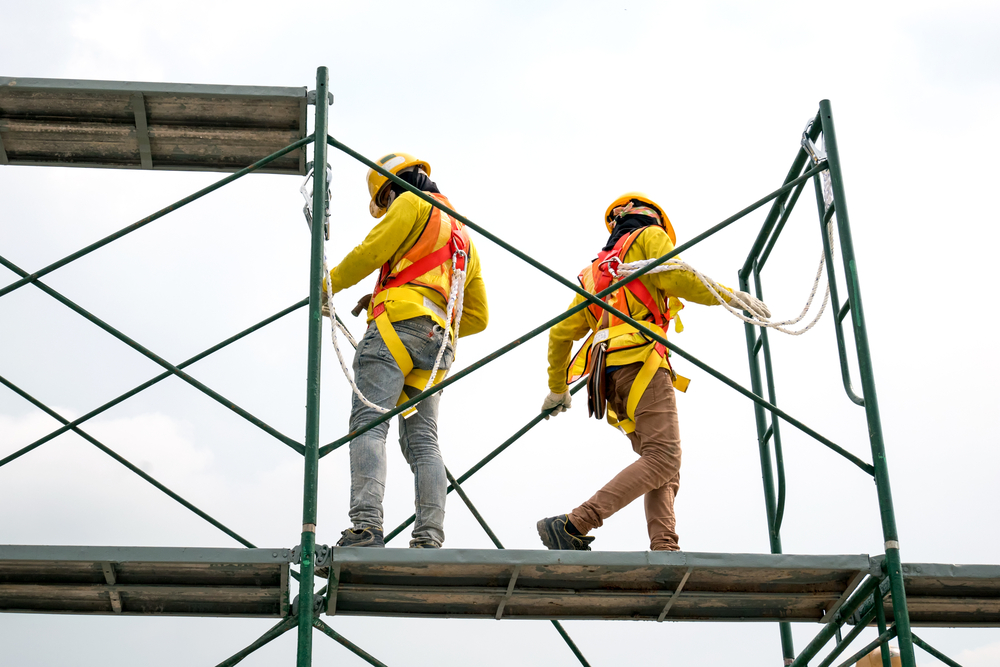
What is the NYC Labor Law?
New York's Scaffold Law (Labor Law § 240) places strict liability on contractors and property owners for height-related injuries.
New York's Scaffold Law (Labor Law § 240) gives construction workers one of the strongest legal protections in any state, placing strict liability on contractors and property owners for height-related injuries.
If you have been hurt in a fall from a height, struck by a falling object, or injured by a scaffold or ladder failure on a New York construction site, the Scaffold Law may apply directly to your case. These cases routinely recover far more than what workers' compensation alone provides.
This article explains how Labor Law § 240 works in practice, who it covers, what defenses don't apply, and when the law does not extend to a particular case.
Schedule a Free Case Evaluation
What You Need to Know
- Labor Law § 240 places strict liability on contractors and property owners for height-related construction injuries.
- The law covers falls from heights, falling object injuries, and accidents involving scaffolds, ladders, hoists, and similar safety devices.
- Common insurance defenses (independent contractor status, worker error, lack of notice) do not work in Scaffold Law cases.
- Comparative fault generally does not reduce a Scaffold Law recovery, even when the worker contributed to the accident.
- The law does not cover routine maintenance, ground-level work, or repairs to one- or two-family homes where the homeowner did not direct the work.
You do not need to know whether the Scaffold Law applies to your case before you call. That is our job. Tell us what happened, and our attorneys will tell you whether § 240 applies, what your case may be worth, and what to do next.
Call (212) 406-1700 for a free case review.
What Does New York Labor Law § 240 Actually Say?
Labor Law § 240 requires contractors and owners to provide proper safety devices for workers performing construction work at height. When the required equipment is missing or fails, contractors and owners face strict liability for the resulting injuries, without the worker having to prove negligence.
The full text of New York Labor Law § 240 appears on the New York State Senate website. The statute references ladders, scaffolds, hoists, slings, stays, ropes, and other safety devices that contractors must provide and use properly.
What strict liability means in practice
Strict liability means a contractor or owner can be held responsible for a Scaffold Law injury without proof of carelessness. The injured worker only has to show two things: the required safety device was missing or inadequate, and the failure caused the injury.
What kind of height-related risk is covered
The Scaffold Law covers any construction work that exposes a worker to risk from a height difference. Falling from a ladder, scaffold, roof, or platform falls within the law. Getting hit by an object dropped from a height during covered construction work also falls within the law.
Who counts as a contractor, owner, or agent
The law applies to general contractors, subcontractors, property owners, and the parties acting as their agents on a project. Both commercial and residential property owners can be liable, with limited exceptions for one- and two-family residential owners who did not direct the work.
Who Is Covered Under the Scaffold Law?
The Scaffold Law covers workers performing construction, demolition, repair, painting, cleaning, alteration, or pointing of buildings or structures. Union and non-union workers, citizens and non-citizens, and workers paid through formal payroll or in cash are all covered.
Construction workers across trades
Carpenters, ironworkers, electricians, plumbers, masons, painters, demolition workers, and other tradespeople performing covered construction activities are protected. The law does not require any specific trade certification or license.
Does the Scaffold Law cover non-union workers?
Yes. The Scaffold Law does not distinguish between union and non-union workers. Workers from open-shop crews, day laborers, and independent contractors performing covered construction work are all protected.
Can undocumented workers file a Scaffold Law claim?
Yes. Immigration status does not bar a Scaffold Law claim. New York courts have repeatedly held that undocumented workers injured on covered construction projects can recover medical costs, lost wages, and pain and suffering under § 240.
What Kinds of Accidents Trigger Scaffold Law Liability?
The Scaffold Law triggers strict liability for two categories of accidents: falls from a height, and injuries caused by objects falling onto a worker from above. Both require that the work involved height-related risk and that the contractor's failure to provide proper safety equipment caused the harm.
Falls from ladders, scaffolds, and platforms
The most common Scaffold Law cases involve workers who fall from a ladder, scaffold, or other elevated work surface. The fall may happen because the equipment was missing, defective, improperly secured, or inadequate for the task.
Falls through unguarded openings
Workers can fall through unguarded floor openings, stair shafts, elevator pits, or other gaps in a partially constructed building. These falls also qualify for Scaffold Law protection because the missing safety device (such as a cover, guardrail, or harness) caused the injury.
Injuries from falling tools and materials
Workers struck by tools, debris, or building materials dropped from above can recover under § 240 when toe boards, debris netting, or other overhead protection was missing or inadequate. The falling object case is the second major category the law covers.
Injuries from collapsing structures
Scaffold collapses, ladder failures, and other structural failures that drop a worker also fall under the law. The collapse is treated as a failure to provide adequate safety equipment, and the contractor or owner is strictly liable.
How Is the Scaffold Law Different From Ordinary Negligence?
The Scaffold Law differs from ordinary negligence in three ways: it imposes strict liability without requiring proof of carelessness, it limits the defenses available to contractors and owners, and it bars the use of comparative fault to reduce a worker's recovery.
What is the difference between strict liability and negligence?
In an ordinary negligence case, the worker has to prove the contractor was careless and that the carelessness caused the injury. In a Scaffold Law case, the worker only has to prove that the required safety equipment was missing or inadequate and that the failure caused the injury.
Why are defenses limited in a Scaffold Law case?
The Scaffold Law was written specifically to limit defenses available to contractors and owners. Arguments that work in ordinary injury cases (worker was an independent contractor, worker should have known better, contractor lacked notice) generally do not work under § 240.
Does the worker's fault reduce a Scaffold Law recovery?
Generally no. Even if the worker contributed to the accident through their own conduct, the contractor's failure to provide proper safety equipment usually controls the outcome. Comparative fault doctrine does not typically reduce a Scaffold Law recovery the way it reduces other personal injury recoveries.
Which Insurance Defenses Don't Work in Scaffold Law Cases?

Three defenses that work in ordinary injury cases fail in Scaffold Law claims: arguing the worker was an independent contractor, arguing the worker's mistake was the sole cause of the injury, and arguing the contractor did not know about the safety failure.
The independent contractor defense
In most personal injury cases, classifying a worker as an independent contractor rather than an employee can limit recovery. Under § 240, this classification does not affect the contractor's or owner's liability. The law applies regardless of how the worker was hired.
The sole proximate cause defense
Contractors sometimes argue that the worker's own actions were the only cause of the injury, eliminating their responsibility. This defense rarely works in Scaffold Law cases because the law treats the missing safety equipment as a contributing cause whenever it played any role in the accident.
The lack of notice defense
In ordinary negligence cases, a defendant may avoid liability by showing they had no notice of a dangerous condition. Under § 240, the contractor's lack of knowledge about a specific safety failure does not absolve them. The duty to provide safety equipment is absolute.
Have Questions About the Scaffold Law? Ask Our Attorneys
The Scaffold Law looks straightforward on paper, but it applies in complex ways depending on the facts of each accident. Our attorneys handle these questions every day and can tell you in one conversation whether § 240 applies to your situation.
Call (212) 406-1700 to talk with a Scaffold Law attorney.
When Does the Scaffold Law Not Apply?
The Scaffold Law does not apply to routine maintenance, ground-level work without height-related risk, or repairs to one- or two-family homes where the homeowner did not direct the work. The law also excludes activities that don't involve construction, demolition, repair, or similar covered work.
Routine maintenance work
Ordinary upkeep tasks, such as changing a light bulb in a commercial building or routine cleaning that does not involve height-related construction work, generally fall outside the Scaffold Law. Courts have drawn a line between covered construction activities and ordinary maintenance.
One- and two-family home exemption
Owners of one- and two-family homes who hired a contractor without directing or controlling the work are typically exempt from Scaffold Law liability. The exemption protects homeowners who did not act as their own contractor. The exemption does not protect commercial property owners or larger residential building owners.
Ground-level work without height-related risk
Tasks performed at ground level with no risk of falling from a height or being hit by a falling object generally do not trigger Scaffold Law liability. Sidewalk repair, street-level demolition, and similar work without height-related risk fall outside the law.
Non-construction activities
Activities that don't involve construction, demolition, repair, painting, cleaning, alteration, or pointing of buildings or structures fall outside the law's scope. Window washing, tree trimming, and similar tasks may or may not qualify depending on the specific circumstances.
Quick reference: When the Scaffold Law applies and when it doesn't
| Activity or Situation | Scaffold Law Applies? |
|---|---|
| Fall from ladder during commercial construction | Yes |
| Fall from scaffold during repair work | Yes |
| Struck by falling tool during covered work | Yes |
| Painting or cleaning a commercial building at height | Yes |
| Demolition work | Yes |
| Routine maintenance with no height-related risk | No |
| Repair to a one- or two-family home (owner did not direct work) | No |
| Sidewalk or ground-level work with no elevation risk | No |
| Window washing on a commercial building | Often yes |
| Tree trimming | Generally no |
Why Choose Our New York Scaffold Law Attorneys at Washor Kool Sosa Maiorana & Schwartz, LLP
Our New York Scaffold Law attorneys handle § 240 cases through three commitments: filing the Scaffold Law claim as the primary theory, coordinating with workers' compensation counsel to move both claims forward, and trying cases to verdict when carriers refuse to settle.
In our experience, the most contested issue in Scaffold Law cases is rarely liability. Strict liability is hard to defeat. The real battle is over the worker's projected lifetime earnings and medical needs, and building that part of the case carefully separates a fair settlement from one that falls short.
We file the Scaffold Law as the primary theory
Some firms treat the Scaffold Law as a backup claim while pushing workers' comp or ordinary negligence theories first. Our attorneys treat § 240 as the primary route to recovery whenever the facts support it, because the strict liability framework drives the highest settlements.
We coordinate workers' comp and the third-party lawsuit
Workers' compensation runs alongside the Scaffold Law lawsuit, and the two need to be coordinated to protect the worker's full recovery. Our attorneys work with workers' comp counsel to keep both claims moving without one undermining the other.
We try Scaffold Law cases to verdict when needed
Insurance carriers settle Scaffold Law cases for full value when they know a firm is prepared to take the case to a jury. Our attorneys prepare every Scaffold Law case for trial from the first day, which positions the case for a strong settlement or a strong verdict.
Frequently Asked Questions About New York Labor Law § 240
How long do I have to file a Labor Law § 240 lawsuit in New York?
Most New York personal injury lawsuits must be filed within three years of the accident. Claims against city or state agencies have much shorter deadlines, sometimes 90 days for a Notice of Claim. Talk to an attorney early to protect your rights.
Can I file a Scaffold Law claim if I already filed for workers' compensation?
Yes. The claims are separate. Workers' compensation pays a portion of lost wages and approved medical care. A Scaffold Law claim pays for pain and suffering, full lost earnings, and other damages workers' comp does not cover. The New York State Workers' Compensation Board handles comp; courts handle the lawsuit.
Does the Scaffold Law cover injuries below ground level?
Yes. Although the law is often called the Scaffold Law because of its application to falls from heights, it also covers injuries from height differentials below ground level, such as falls into trenches or excavations.
Can family members recover under § 240 if a worker is killed?
Yes. When a construction worker dies in a Scaffold Law accident, surviving family members can recover funeral costs, lost financial support, and other wrongful death damages under New York's wrongful death statute. The § 240 framework still applies to establish liability.
What if my employer says I was warned not to use a particular ladder or scaffold?
Warnings generally do not eliminate Scaffold Law liability. The law focuses on whether the right safety equipment was provided for the task, not on whether the worker was instructed to be careful. Even if you were warned, you may still have a claim under § 240.
Don't Let the Filing Deadline Expire on Your Claim
New York's statute of limitations on personal injury cases is generally three years from the accident. Some claims, including those against city or state agencies, have much shorter deadlines, sometimes 90 days. Waiting can permanently cost you the right to recover under the Scaffold Law.
Call (212) 406-1700 to start your case today.
Washor Kool Sosa Maiorana & Schwartz, LLP
The Woolworth Building
233 Broadway, 18th Floor
New York, NY 10279