New York Labor Law 240, often called the Scaffold Law, holds property owners and general contractors responsible for elevation-related construction accidents when proper safety devices were not provided. Injured construction workers can recover full damages for their injuries, including pain and suffering, beyond what workers' compensation pays.
The law applies even when the worker shared some blame for the accident.
New York Labor Law 240 protects construction workers from elevation-related injuries by making property owners and general contractors strictly liable when adequate safety equipment fails or was never provided. If a fall from a ladder, scaffold, or other height left a worker hurt and unable to work, the law often allows recovery far beyond what workers' compensation pays.
What rights do construction workers have under NY's Scaffold Law after a fall or jobsite injury?
New York Labor Law 240 lets injured workers sue property owners and general contractors when a fall, scaffold collapse, or falling object hurts them, even if the worker shared some blame. The lawsuit can recover pain and suffering, full lost wages, and future medical bills that workers' compensation does not pay.
Construction accident lawyers handle these claims because the rules are specific, the deadlines are real, and the defenses are aggressive.
A serious construction fall changes life immediately. Medical bills mount. Work stops. Family income disappears. Pressure to settle quickly with the contractor's insurance company can feel impossible to resist.
Many injured workers do not realize that Labor Law 240 may give them a separate, much larger claim against the property owner and general contractor on top of their workers' compensation benefits.
The Bottom Line:
- Property owners and general contractors are responsible for elevation-related accidents when proper safety devices were not provided, even if they did not know about the problem.
- Labor Law 240 third-party lawsuits can recover pain and suffering, full lost wages, and future medical costs that workers' compensation does not pay.
- Workers paid in cash, given a 1099, or hired through staffing agencies can file Labor Law 240 claims.
What Is New York Labor Law 240?
Labor Law 240 is a New York state statute that places responsibility for the safety of construction workers on property owners and general contractors. The law applies to construction, demolition, and repair work involving elevation.
When was Labor Law 240 enacted?
Labor Law 240 was first enacted in the 1880s and has been refined through court decisions for more than a century. The original statute responded to industrial-era construction deaths from scaffold collapses and falls. Each major court ruling since then has shaped how courts apply the law to modern construction sites.
Why is it called the Scaffold Law?
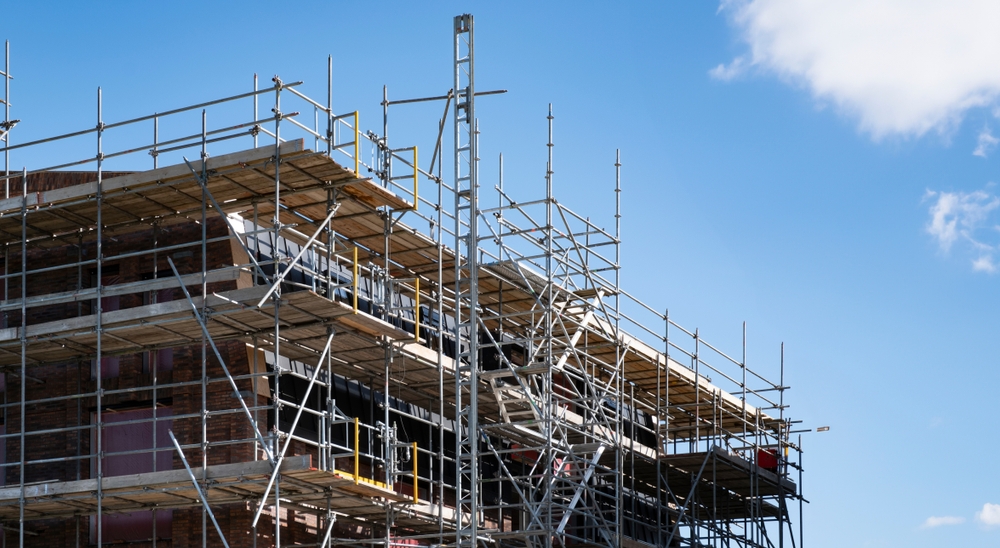
The law is often called the Scaffold Law because scaffold accidents drove much of its early development. The protections now extend well beyond scaffolds to cover ladders, hoists, slings, pulleys, ropes, and other devices used at height. The law also covers falls from elevated work surfaces and injuries from falling objects on construction sites.
Many Scaffold Law New York cases involve scaffold collapses, ladder falls, and falls through floor openings on commercial and residential construction sites.
What makes Labor Law 240 different from other safety laws?
What sets Labor Law 240 apart from other safety statutes is its strict liability rule. Property owners and general contractors are responsible when a safety device fails to provide proper protection, regardless of whether the owner or contractor knew about the problem in advance. This is one of the most plaintiff-friendly safety laws in the country.
Falls remain the leading cause of fatal injuries among construction workers, according to the U.S. Bureau of Labor Statistics. New York's response to that pattern is one of the strongest worker protection laws in the United States.
What does Labor Law 240(1) cover specifically?
Labor Law 240(1) is the New York provision that creates strict liability for elevation-related construction accidents. The subsection lists scaffolding, hoists, stays, ladders, slings, hangers, blocks, pulleys, braces, irons, and ropes as examples of devices that must be furnished to workers. Most strict liability cases proceed under Labor Law 240(1).
Who Does Labor Law 240 Protect?
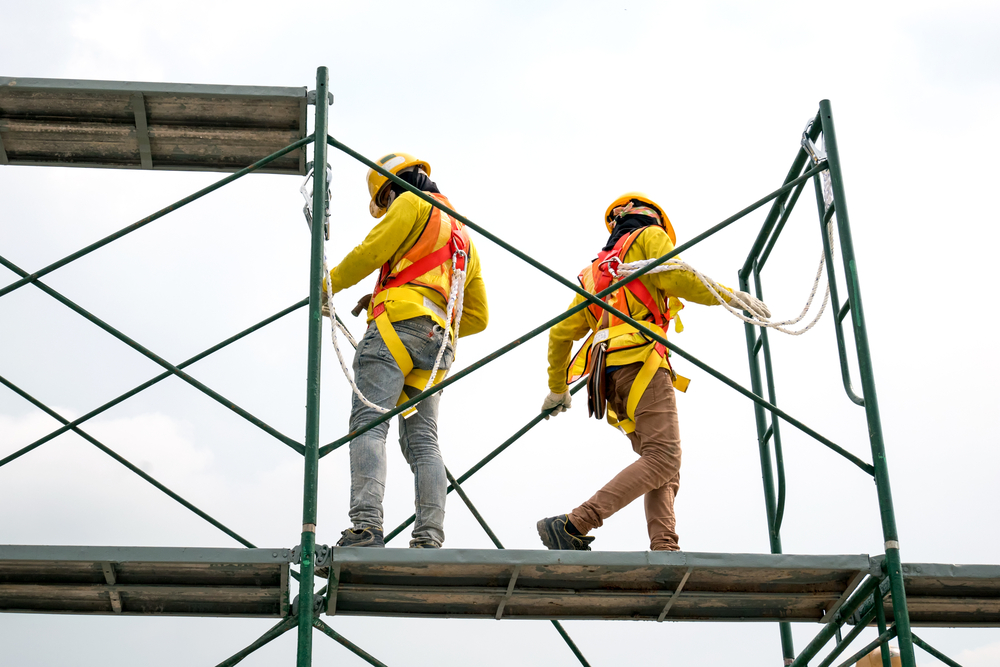
Labor Law 240 protects workers performing construction, demolition, repair, alteration, painting, cleaning, or pointing of a building or structure. The protection extends broadly, covering payroll employees, workers paid in cash, workers classified as independent contractors, and workers from staffing agencies. Immigration status does not affect the right to recover.
What kinds of workers are covered?
The covered worker categories include:
- Carpenters: Workers framing buildings, installing trim, or building forms for concrete pours
- Electricians: Workers installing wiring, fixtures, or electrical service at any elevation
- Roofers: Workers installing or repairing roofs of any building type
- Painters: Workers painting exteriors or working on elevated surfaces during interior painting
- Demolition workers: Workers tearing down structures or removing materials at height
These categories cover most construction trades, but the law's reach extends to any worker performing covered activities on a construction site. A construction accident lawyer can review the specific facts of an injury to determine whether Labor Law 240 applies.
Who is not protected by Labor Law 240?
The law does not cover routine maintenance work, work on residential one- and two-family homes where the owner does not direct or control the work, or work that does not involve elevation. Workers who fall while performing routine cleaning, for example, may have other claims but typically cannot rely on Labor Law 240.
Who Can Be Held Liable Under Labor Law 240?
The law makes property owners and general contractors liable for elevation-related accidents on construction sites. The liability extends to most owners regardless of whether they were physically present or actively directed the work. Subcontractors, equipment manufacturers, and other parties may also share liability under separate legal theories.
How is a property owner liable?
The owner of the property where construction occurs is liable under Labor Law 240 even when the owner hired a general contractor and had no direct involvement in the work. This non-delegable duty is one of the law's most important features. Owners of one- and two-family residential homes have a limited exception if they did not direct or control the work.
When is the general contractor liable?
The general contractor managing the construction project is liable under Labor Law 240 when an elevation-related accident occurs and proper safety devices were not provided. The general contractor's liability is also non-delegable, meaning the contractor cannot avoid responsibility by claiming that a subcontractor was supposed to handle safety.
What other parties can be liable?
Some construction managers act with the authority of general contractors and may be liable under Labor Law 240. Subcontractors that created an unsafe condition may face separate negligence claims. Equipment manufacturers may face product liability claims when defective tools, ladders, or scaffolds contributed to the accident.
| Elevation Risk Type | Common Examples |
|---|---|
| Falls from Height | Ladders, scaffolds, roofs, and unprotected floor openings. |
| Falling Objects | Tools or materials falling from above and striking workers below. |
What Is an Elevation-Related Accident?
An elevation-related accident under Labor Law 240 is one where the worker was exposed to a gravity-related risk and was injured because proper safety equipment was missing, defective, or inadequate. The injury must be tied to a fall, a falling object, or another gravity-related hazard.
What kinds of falls from height qualify?
Falls from ladders, scaffolds, roofs, elevated platforms, open floor edges, and unsecured floor openings all qualify as elevation-related accidents. A worker who falls from any height where safety devices should have been in place may have a Labor Law 240 claim.
What falling object injuries are covered?
When tools, materials, debris, or other objects fall from height and strike a worker below, Labor Law 240 may apply if the falling object was being hoisted, was inadequately secured, or required securing under the safety regulations. Not every falling object case qualifies. The object must have been one that required protection from gravity.
Common elevation accident types
The most frequent elevation-related accidents include:
- Ladder falls: Workers fall when ladders are placed on uneven ground, are defective, or lack proper securing
- Scaffold falls and collapses: Workers fall through gaps in planking, from missing guardrails, or when scaffold structures fail
- Falls through floor openings: Unprotected or inadequately covered openings cause workers to fall to lower floors
- Falls from rooftops: Workers fall from roofs without proper edge protection or fall arrest equipment
- Falling tools and materials: Workers below are struck by inadequately secured objects falling from above
Each of these scenarios fits within Labor Law 240's protections when the right safety equipment was missing or failed. A construction accident lawyer can evaluate the specific accident facts and determine which elements of the law apply.
What Are Proper Safety Devices?
Labor Law 240 lists examples of proper safety devices that owners and contractors must provide. The legal question in any case is whether the device that was provided actually offered proper protection from the gravity-related risk involved in the work.
What does the statute list as proper safety devices?
Labor Law 240 lists scaffolding, hoists, stays, ladders, slings, hangers, blocks, pulleys, braces, irons, ropes, and other devices that protect workers from gravity-related hazards. The list is not exhaustive. Any device designed to protect workers from height-related risks may qualify.
When does a device fail to provide proper protection?
The legal question is whether the device provided proper protection. A scaffold that lacks guardrails, a ladder that lacks proper footing, or a harness with a defective anchor point can all fail to provide proper protection even when something was technically in place at the site. The failure of protection, not just the absence of equipment, can support a claim.
What Does Workers' Compensation Not Cover?
Workers' compensation pays medical bills and a portion of lost wages regardless of fault, but it does not pay for pain and suffering, full lost earnings, or loss of enjoyment of life. The gap between workers' compensation and full recovery is what makes Labor Law 240 third-party lawsuits important.
Why does workers' compensation fall short?
Workers' compensation covers medical treatment related to the accident and replaces a portion of the worker's lost wages during recovery. According to the New York State Workers' Compensation Board, wage replacement is capped at two-thirds of the worker's average weekly wage, subject to a maximum that often falls short of the worker's actual earnings.
How does a Labor Law 240 lawsuit fill the gap?
A Labor Law 240 third-party lawsuit can recover the full lost wages workers' compensation does not pay, the full medical expenses, including future care, pain and suffering damages, and loss of enjoyment of life. For workers with serious or permanent injuries, the third-party recovery typically exceeds workers' compensation benefits by a wide margin.
Start Your Legal Journey with a Trusted Advocate

Labor Law 240 changed New York construction work. The statute placed responsibility for safety on the parties with the power to control the work site, not on the workers who are injured by conditions they did not create.
For injured construction workers, the law often provides the difference between basic workers' compensation benefits and full recovery for what the accident actually cost.
What would full recovery look like in the specific circumstances of your accident? The answer depends on the facts: the type of elevation, the safety equipment provided or not, the roles of each party on the site, and the nature and extent of the injuries.
If you or someone you know has been injured on a NY construction site, the attorneys at Washor Kool Sosa Maiorana & Schwartz, LLP can review the facts and explain what protections apply.
Call (212) 406-1700 for a free case evaluation.
Schedule a Free Case Evaluation