What rights do you have if you slipped or tripped on debris at a New York construction site?
A trip over debris or scattered materials may support a Labor Law 241(6) claim under Rule 23-1.7(e), while a slip caused by water, grease, ice, or another foreign substance may fall under Rule 23-1.7(d).
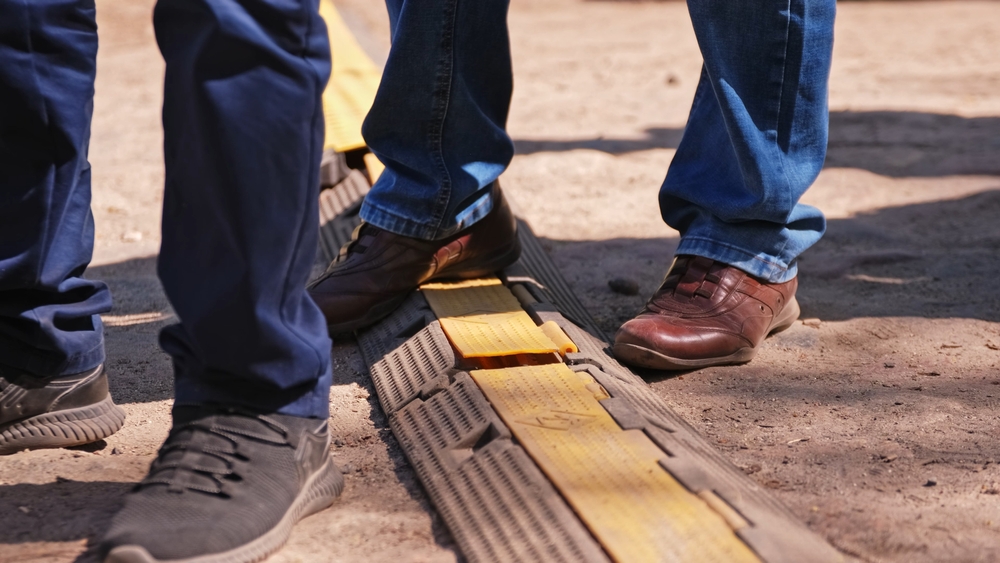
Construction sites generate debris constantly. Offcuts, packaging, scattered tools, spilled materials, tangled cords, and accumulated scrap all collect in walkways and work areas as the job proceeds. Some of it puts a worker on the ground with a serious injury. The New York State Industrial Code treats housekeeping as a safety requirement, not a matter of tidiness.
In our experience handling construction fall cases across NYC, slip and trip claims often turn on a question the defense raises early: was the condition genuinely inherent in the work being performed, or was it an accumulation that reasonable housekeeping could have cleared? The answer frequently determines whether the claim proceeds.
Schedule a Free Case Evaluation
What the Law Says
- Two different regulations apply: Rule 23-1.7(e) governs tripping hazards from debris and obstructions, while Rule 23-1.7(d) governs slipping hazards from ice, snow, water, grease, and other foreign substances.
- The integral-to-the-work defense has limits: After the 2024 Bazdaric decision, the defense applies only when the condition was inherent in the task and removing it would make the work impossible.
- Passageways and work areas are treated differently: Rule 23-1.7(e) distinguishes between them.
These points cover the core issues, but the specific facts of any fall determine the legal analysis.
What Do Rules 23-1.7(d) and 23-1.7(e) Require?
Rules 23-1.7(d) and 23-1.7(e) are the provisions of the New York State Industrial Code that address slipping and tripping hazards on construction sites. They cover different types of hazards and are among the more frequently litigated provisions in these cases.
Rule 23-1.7(e): Tripping Hazards
Rule 23-1.7(e) addresses tripping hazards from debris and obstructions. It has two parts that apply to different site areas:
- Passageways: Subsection (e)(1) requires passageways to be kept free from accumulations of dirt, debris, scattered tools and materials, and sharp projections that could cause tripping.
- Working areas: Subsection (e)(2) requires the parts of floors, platforms, and similar areas where people work or pass to be kept free from accumulations of dirt and debris and from scattered tools, materials, and sharp projections insofar as may be consistent with the work being performed.
Rule 23-1.7(d): Slipping Hazards
Rule 23-1.7(d) addresses slippery conditions. It requires employers to keep floors, platforms, and other working surfaces free from ice, snow, water, grease, and other foreign substances that could cause slipping. When a worker slips on a liquid or surface condition rather than tripping over a physical object, the claim generally falls under subsection (d).
The New York State Industrial Code, Rule 23-1.7, sets out the full text of both provisions.
What Counts as a Debris or Housekeeping Hazard?
A debris or housekeeping hazard is an accumulation of material in a walkway or work area that a worker could trip over or slip on. Construction sites produce these hazards throughout the workday.
Common Tripping Hazards Under Rule 23-1.7(e)
- Scattered tools and materials: Hand tools, fasteners, offcuts, and supplies left in walkways
- Construction debris: Packaging, scrap lumber, broken materials, and general waste
- Cords and hoses: Electrical cords, air hoses, and welding leads stretched across walkways
- Sharp projections: Protruding rebar, nails, and metal edges
- Accumulated dirt: Buildup that obscures the walking surface and hides other hazards
Common Slipping Hazards Under Rule 23-1.7(d)
- Spilled liquids: Oil, hydraulic fluid, paint, grease, and other spilled substances
- Water accumulation: From weather, leaks, or construction processes
- Ice and snow: Untreated accumulation on outdoor and exposed work areas
- Other foreign substances: Materials that make the walking surface slippery
The question in any case is whether the condition should have been addressed and whether its presence violated the applicable provision.
The Integral to the Work Defense
The most common defense in construction slip-and-trip cases is that the condition the worker encountered was integral to the work being performed. The scope of this defense narrowed significantly after a 2024 Court of Appeals decision.
How the Defense Works After Bazdaric
The integral-to-the-work doctrine does not apply merely because the material was related to the construction project or produced by the worker's trade. Following the New York Court of Appeals decision in Bazdaric v. Almah Partners LLC, the defense generally applies only when the condition was inherent in the task and removing or correcting it would have made the work impossible.
Debris Created During Active Work
Debris created during active work may still violate Rule 23-1.7(e) when reasonable housekeeping measures could have removed the danger without interfering with the job. A 2026 appellate decision applied this standard to metal debris generated by the plaintiff's employer and found the defense did not apply, because the debris could have been removed without preventing the work from being completed.
What Injuries Result From Construction Slips and Trips?
Falls on debris and slippery surfaces produce more than minor injuries. A construction worker who falls on an unstable surface, near an edge, or onto equipment can suffer serious harm.
- Fractures: Broken wrists, arms, hips, and ankles from the impact of the fall
- Head injuries: Concussions and traumatic brain injuries when the worker strikes the ground or equipment
- Back and spinal injuries: Herniated discs and vertebral injuries from the fall
- Knee and shoulder injuries: Torn ligaments and joint damage
- Secondary fall injuries: A trip near an edge or opening can lead to a fall from height, producing catastrophic injuries
The severity depends on the surface, the surroundings, and what the worker strikes. A trip that would be minor on open ground can be catastrophic near an unguarded edge.
How Does New York Law Apply to Slip and Trip Accidents?
Construction slip-and-trip accidents may support Labor Law claims against property owners and general contractors, and workers' compensation claims against the direct employer. The applicable framework depends on the cause of the accident and the parties involved.
Labor Law 241(6) and the Protected-Activity Requirement
Section 241(6) is typically the primary theory in construction slip and trip cases. The section requires a specific Industrial Code violation, and Rules 23-1.7(d) and (e) have been recognized as sufficiently specific to support a claim when they apply.
Section 241(6) does not cover every accident that happens near construction. The injured person must have been employed in, or lawfully present in, an area where qualifying construction, excavation, or demolition work was being performed.
Labor Law 200 Standards
Section 200 claims follow different standards depending on the cause of the accident. When the injury arises from the means and methods of the work, the plaintiff generally must prove that the defendant supervised or controlled the injury-producing work. When the accident arises from a dangerous premises condition, such as an accumulation of debris, the plaintiff generally must prove that the defendant created the condition or had actual or constructive notice of it.
Who Is Liable in a Construction Slip and Trip Case?
Liability in a construction slip and trip case may run against several parties. A New York construction site slip-and-fall lawyer typically investigates the property owner, the general contractor, and other parties responsible for site conditions.
Property Owners and General Contractors
Owners and general contractors may face Labor Law 241(6) liability when a Rule 23-1.7(d) or (e) violation contributed to the fall. Section 200 may also apply when the defendant created the condition or had actual or constructive notice of it.
Certain owners of one- and two-family homes are exempt from Sections 240(1) and 241 when they contracted for the work but did not direct or control it. They may still face liability under Section 200 or ordinary negligence principles if they created or had notice of a dangerous property condition.
Subcontractors and Other Trades
A subcontractor who is not the injured worker's employer may be liable when its debris, materials, or spills create the hazard. A subcontractor may also qualify as a statutory agent under the Labor Law when it has authority to supervise or control the injury-producing work. Workers' compensation is generally the exclusive remedy against the worker's direct employer.
Frequently Asked Questions About Construction Slip and Trip Accidents in New York
How long do I have to file a slip-and-trip lawsuit in New York?
Most New York construction accident lawsuits must be filed within three years. Claims against New York City, NYCHA, the MTA, and many other public entities may require a Notice of Claim within 90 days. Port Authority claims follow different rules, including a one-year filing deadline and notice at least 60 days before the lawsuit begins.
What if I tripped on materials that were part of my own work?
The integral-to-the-work defense may apply, but its scope is narrow. Following the Bazdaric decision, the defense generally applies only when the condition was inherent in the task and removing it would have made the work impossible. If reasonable housekeeping could have cleared the material without interfering with the job, you may still have a viable claim even if the debris came from your own trade.
Can I recover if the debris was in plain sight?
Possibly. The fact that a hazard was visible does not automatically defeat a Labor Law 241(6) claim, though it may raise comparative fault questions. Under Section 241(6), comparative fault reduces but does not eliminate recovery. A worker who saw the debris but had no reasonable alternative path may still recover.
Can I file a claim if I am undocumented or was paid in cash?
Undocumented workers can generally pursue New York workplace injury claims. Immigration status alone does not automatically bar compensation, although work authorization, wage records, and the use of false documents can affect a lost-earnings claim. Cash payment does not bar the claim but may complicate the proof of lost earnings.
What evidence helps prove a debris or housekeeping claim?
Photographs of the condition and the scene, witness accounts of what the material was and whether it could have been cleared, incident reports, and any site inspection records all help. Because the integral-to-the-work defense turns on whether the condition was inherent in the task, this evidence is often decisive. Preserving it quickly matters because sites get cleaned within days.
When a Cluttered Walkway Becomes a Legal Claim
Housekeeping on a construction site is a safety requirement backed by specific regulations. Rules 23-1.7(d) and (e) exist because debris, spills, and accumulations in walkways and work areas put workers on the ground. When a violation of those provisions contributes to a fall, New York law may provide claims against the parties responsible for site conditions.
Whether the rules apply to a given fall depends on the location, the nature of the condition, and whether the integral-to-the-work defense applies under the current standard. Those questions turn on facts that require investigation.
If you or someone you know was injured in a slip or trip on a NY construction site, the attorneys at Washor Kool Sosa Maiorana & Schwartz, LLP can review the facts and explain what protections apply.
Call (212) 406-1700 for a free case evaluation.