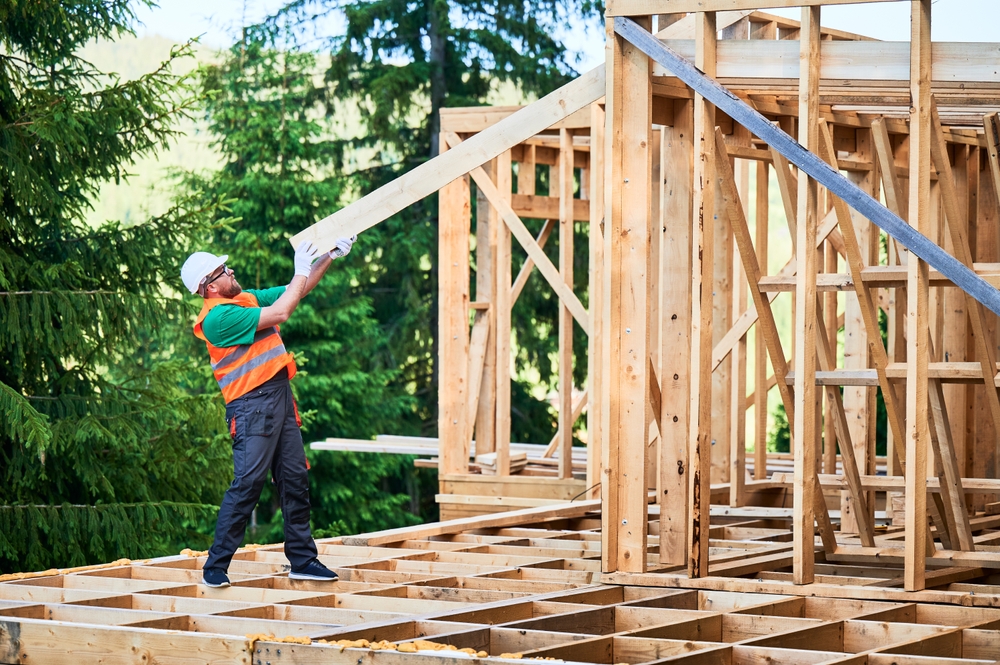
Roofing is one of the most dangerous jobs in construction. The work happens at height, on surfaces not designed for walking, often in weather that changes without warning. Workers move loads, use nail guns, cut through the membrane, and step around openings that were supposed to be covered. When something goes wrong, the fall is usually a long one.
When you need a roofing accident lawyer, our attorneys at Washor Kool Sosa Maiorana & Schwartz, LLP can help.
The U.S. Bureau of Labor Statistics consistently identifies roofers as having one of the highest occupational fatality rates in the country. NYC roofing work adds factors that make the numbers worse. Older buildings have deteriorated roof structures. Flat commercial roofs have skylights and mechanical openings that create fall hazards.
Steep residential roofs on brownstone renovations often lack adequate anchor points for fall-arrest systems.
Schedule a Free Case Evaluation
Talk to a Roofer Injury Lawyer in New York Before Anyone Else
The contractor's insurance adjuster will call within days of the fall. The conversation will sound helpful. It is not. Speak with a roofer injury lawyer in New York before answering any questions.
Call (212) 406-1700 for a free case review.
What Counts as a Roofing Accident in New York?
A roofing accident in New York is any injury a worker sustains while performing roof-related work: installation, repair, inspection, maintenance, or demolition. The category covers falls from the roof edge, falls through the roof surface, falls through skylights or openings, and falls from ladders used to access the roof.
What kinds of falls happen on NYC roofs?
The most common roofing falls include:
- Falls from the roof edge: Workers step off the edge while carrying materials, working near the perimeter, or moving between sections
- Falls through skylights: Workers step on or fall through unmarked or unprotected skylight domes
- Falls through the roof itself: Rotted decking, deteriorated membrane, or newly cut openings give way under the worker
- Falls from access ladders: Ladders slip, tip, or shift while the worker is transitioning between the ladder and the roof
- Falls on the roof surface: Slips on wet membrane, ice, algae, or loose granules cause workers to slide toward the edge
Each type of fall raises different liability questions, but almost all of them involve safety devices that were missing, defective, or not properly deployed.
What about non-fall roofing injuries?
Roofing accidents include more than falls. Workers get burned by hot asphalt, cut by sheet metal or torn membrane, shocked by contact with overhead lines, and struck by falling tools or materials. Heat illness and respiratory injuries from fumes are common. Each injury type has its own investigation path.
How Does Labor Law 240 Apply to Roofing Accidents?
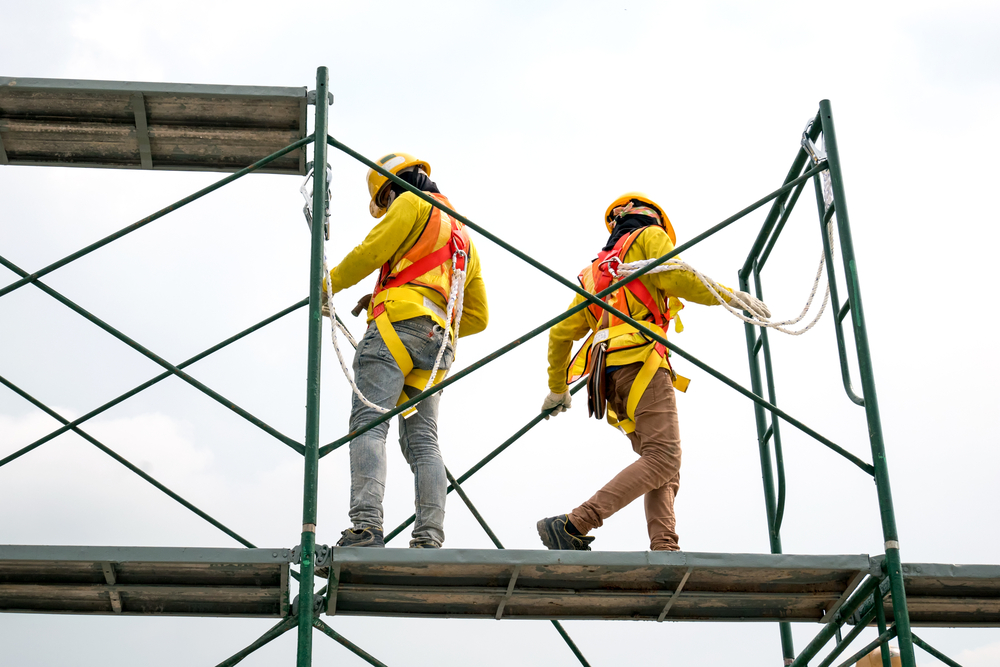
Labor Law 240, the Scaffold Law, applies to almost every serious roofing fall on a NYC construction site. The law imposes strict liability on property owners and general contractors when a worker falls because proper safety devices were not provided.
Why does the Scaffold Law fit roofing work so well?
Labor Law 240 was designed to protect construction workers from gravity-related risks. Roofing concentrates those risks in a single activity. Workers are at height. Falls happen when anchor points fail, harnesses were never provided, guardrails were missing, or the roof surface itself gave way. Few construction jobs fit the statute as directly as roofing.
What safety devices should have been in place?
For roofing work at height, proper protection typically includes:
- Personal fall arrest systems: Harnesses, lanyards, and anchor points rated for the load
- Guardrails at the roof edge: Physical barriers along the perimeter
- Safety nets: Below the work area to catch workers who fall
- Skylight covers or screens: To prevent falls through skylights
- Warning line systems: For flat roofs where workers must stay away from the edge
When any required system is missing or defective, the property owner and general contractor face strict liability under Labor Law 240.
Does the worker's conduct reduce recovery?
Generally no. The worker's own conduct does not reduce recovery under Labor Law 240 in most circumstances. The defendants must prove the worker was the sole proximate cause of the fall, which courts apply rarely. A worker who slipped, lost balance, or made a mistake on the roof usually still recovers full damages.
What Causes Roofing Falls on NYC Construction Sites?
Roofing falls in NYC usually trace to one of five causes: missing fall protection, defective anchor points, unmarked openings, deteriorated roof surfaces, or pressure to work in weather that should stop the job.
Missing personal fall arrest systems
The most common cause is the simplest. The worker was not wearing a harness, or the harness was not tied off to an anchor point. Sometimes the equipment was never provided. Sometimes it was provided but the anchor points were not installed. Either failure shifts liability to the parties responsible for the site.
Defective or improperly installed anchor points
When anchor points fail during a fall, the fall becomes deadly. Failed anchors trace to improper installation, wrong hardware for the roof type, deteriorated existing anchors on older buildings, or overloading beyond the rated capacity. Each failure mode produces claims against different parties.
Unmarked skylights and roof openings
Skylight domes are not designed to hold a worker's weight. Workers walking across roofs step on or into skylights that were not marked or covered. Roof openings for HVAC equipment, plumbing vents, and other systems create the same hazard when they are not properly guarded.
Deteriorated or defective roof surfaces
Older NYC buildings have roofs with rotted decking, corroded metal panels, and deteriorated membrane. Workers step onto surfaces that appear intact but cannot support the load. Renovation work on aging commercial buildings and brownstones produces this hazard routinely.
Weather-related pressure
Rain, ice, wind, and extreme heat all create roofing hazards. Site management decisions to continue working through weather that should stop the job produce falls that would otherwise not happen. These management decisions shift responsibility to the parties controlling the site.
Who Is Liable in a Roof Fall Construction Injury Case in NYC?
A roof fall construction injury attorney in NYC investigates several parties for liability: the property owner, the general contractor, the roofing subcontractor, the manufacturer of any defective fall protection equipment, and building system contractors whose work created hazards.
- Property owners and general contractors
- Roofing subcontractors
- Equipment manufacturers
- Building system contractors
What Injuries Result From Roofing Falls?
Roofing falls produce serious injuries because of the height involved and the surfaces workers fall onto. NYC roofing accidents commonly result in permanent disability or death.
Traumatic brain injuries
Head impact from a roof fall routinely produces concussions, skull fractures, and severe traumatic brain injuries. The Centers for Disease Control and Prevention documents the long-term cognitive impact of construction-related TBIs, which frequently prevent return to skilled trade work.
Spinal cord and back injuries
Roof falls produce vertebral fractures, herniated discs, and in serious cases permanent paralysis. The height and the hard landing surfaces mean spinal injuries from roof falls tend to be more severe than those from lower-height falls.
Broken bones
Workers who instinctively try to break the fall commonly break wrists, arms, hips, and legs. Complex fractures often require surgery, hardware implants, and months of rehabilitation. Many workers cannot return to physical construction work afterward.
Internal organ injuries
High-impact roof falls produce internal bleeding, ruptured organs, and abdominal trauma that may not be visible at the scene. Emergency imaging is critical for these injuries, which can be life-threatening.
Fatal injuries
Fatal roof falls are common enough that OSHA and BLS both track them separately. Wrongful death claims allow surviving family members to recover funeral costs, lost financial support, and loss of guidance under New York's wrongful death statute.
What Compensation Can a Roofing Accident Lawyer Recover?
A roofing accident lawyer pursues compensation in three categories: workers' compensation benefits, third-party Labor Law lawsuit damages, and product liability damages when defective equipment contributed to the accident.
Workers' compensation benefits
Workers' compensation pays medical bills and a portion of lost wages regardless of fault. The benefits do not cover pain and suffering or full lost earnings. According to the New York State Workers' Compensation Board, wage replacement is capped at two-thirds of the worker's average weekly wage.
Third-party Labor Law damages
The Labor Law lawsuit against the property owner and general contractor recovers past and future medical expenses, full lost wages, lost earning capacity, pain and suffering, and loss of enjoyment of life. For serious roof fall injuries, the third-party recovery routinely exceeds workers' compensation by a wide margin.
Product liability damages
When defective harnesses, lanyards, anchor points, or other fall protection equipment contributed to the accident, the manufacturer can be liable for the full range of damages alongside the property owner and general contractor.
Wrongful death damages
When a roof fall kills a worker, surviving family members can recover under New York's wrongful death statute.
Call (212) 406-1700 to send preservation letters today.
Schedule a Free Case Evaluation
Why Choose Our NYC Roofing Accident Lawyers at Washor Kool Sosa Maiorana & Schwartz, LLP
In our experience handling roofing accident cases across NYC, the strongest cases combine three elements: early investigation that preserves the scene and equipment, bilingual interviews that accurately capture the worker's account, and damage preparation that anticipates the long-term medical picture.
Many NYC roofers describe what happened most accurately in Spanish or in the technical language of their trade. When a lawyer speaks the worker's first language and understands roofing terminology for anchor points, harnesses, and roof systems, the case investigation moves faster than it would through an interpreter.
Spanish-speaking lawyers who know the trades
Many NYC roofing accident cases involve workers whose first language is Spanish. Our attorneys speak with workers directly in Spanish and understand the roofing terminology workers use to describe specific equipment, safety devices, and procedures.
Investigation that starts the day you call
When clients call our firm after a NYC roofing fall, investigators are dispatched the same day. Roofs get repaired, equipment gets returned, and surveillance footage gets overwritten on schedules of days. Speed protects evidence that wins cases.
Track record across construction cases
Our attorneys have recovered over $1 billion for injured clients and their families. We handle roofing falls, ladder falls, scaffold collapses, falling object claims, electrocution cases, and crane accidents across all five boroughs.
Direct attorney attention
Strategic decisions, depositions, settlement negotiations, and trial work stay with the partners actually handling the case. You will not be passed off to associates. The lawyers handling your case are the lawyers who will try it if it goes to verdict.
Frequently Asked Questions About NYC Roofing Accident Claims
I fell off a roof at work. What kind of lawyer do I need in NY?
If you fell off a roof at work, you need a lawyer who handles construction accident cases under New York Labor Law. These cases involve strict liability rules, Industrial Code violations, and product liability angles that are different from ordinary personal injury cases. The lawyer should investigate the site, the equipment, and the parties involved from the day you call.
How long do I have to file a roofing accident lawsuit in New York?
Most NY roofing accident lawsuits must be filed within three years of the accident. Claims against NYC, NYCHA, the MTA, the Port Authority, or other government entities require a Notice of Claim within 90 days and a lawsuit within one year and 90 days.
What if I was a residential roofer working on a one- or two-family home?
Owners of one- and two-family residential homes have a limited exception under Labor Law 240 when they did not direct or control the work. If a general contractor or homeowner directed the specific work that led to the fall, the exception may not apply. The facts of who controlled the work are decisive.
Can I sue if I was paid in cash?
Yes. Cash payment does not bar a Labor Law 240 claim. The law protects workers performing covered construction activities regardless of how they were paid. Cash payment can affect the workers' compensation claim but does not eliminate the third-party lawsuit.
Get Your NYC Roofing Accident Case Started Today
The case review is free. We pay all case costs upfront. You owe nothing unless we recover money for you. Roof evidence disappears within days, so early investigation matters most.
Call (212) 406-1700 to get started.