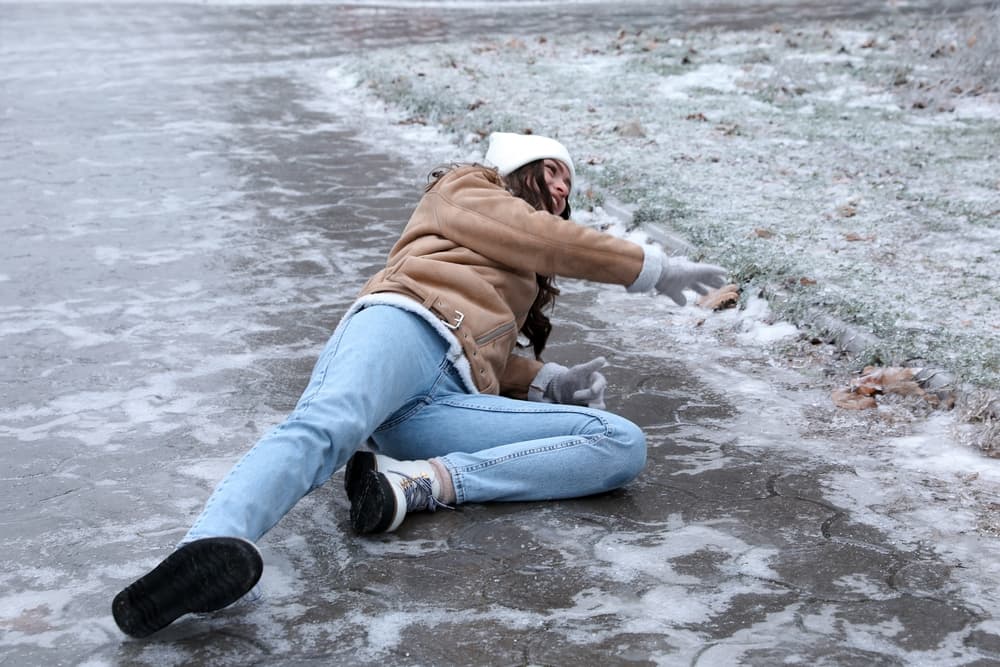
You may be able to sue if you slipped on ice in upstate New York. However, NY law makes slip-and-fall ice cases significantly harder to win than most people expect. A serious fall on a snowy sidewalk or icy parking lot does not automatically mean the property owner is responsible.
Whether a valid claim exists depends on timing, evidence, and a set of legal rules that protect property owners in ways that often surprise injured people.
Winter in Upstate New York is relentless. Albany, Buffalo, Syracuse, and the surrounding regions rank among the snowiest urban areas in the country.
Injuries from snow and ice falls happen every season, and many of them are severe. Broken hips, fractured wrists, spinal injuries, and head trauma are common outcomes when someone goes down hard on a frozen surface. The physical toll is real, and navigating the legal path to recovery often requires guidance from an experienced Upstate New York personal injury lawyer.
Schedule a Free Case Evaluation
What to Know Now
- New York's storm-in-progress rule can completely bar a claim if the fall occurred during active precipitation or before the property owner had reasonable time to clear it.
- Property owners may actually create liability by making a natural condition worse, such as applying ice melt that refreezes into a more dangerous surface.
- Evidence gathered within hours of the fall, including photographs, weather records, and witness contact information, often determines whether a case can move forward at all.
The Storm-in-Progress Rule and Why It Changes Everything
The storm-in-progress rule is the single most important legal concept in any New York slip-and-fall case. It is also the reason many legitimate injury claims do not result in recovery.
Under this rule, a property owner cannot be held liable for a slip-and-fall that occurs during an active storm.
The law gives property owners time to respond to weather conditions they did not create. Courts have consistently held that requiring someone to shovel or salt in the middle of a snowstorm is not a reasonable standard, and liability does not attach until the storm ends and a reasonable window for cleanup has passed.
What During a Storm Actually Means
The rule does not require a blizzard. A steady snowfall, freezing rain, or sleet qualifies. If precipitation of any kind was falling at the time of the fall or had stopped only recently, the property owner may have a complete defense regardless of how dangerous the condition looked.
This has real consequences for injured people:
- Active precipitation: If snow or freezing rain was falling at the moment of the fall, the claim is almost certainly barred under the storm-in-progress rule.
- Recently ended storms: A storm that ended one hour before the fall is treated very differently than one that ended eight hours before. Whether enough time had passed for a reasonable cleanup is a fact-specific question.
- Mixed precipitation events: Rain that freezes on contact, or snow followed by a temperature drop that turns slush into ice, can create ambiguity about when the storm actually ended and whether the resulting condition was natural or created by the property owner.
The storm-in-progress rule is not a loophole. It is a deliberate legal protection, and courts apply it seriously.
What "Reasonable Time" to Clear Actually Means in Practice
Once a storm ends, the clock starts. But New York courts have never established a fixed number of hours that automatically satisfies or violates the reasonable time standard.
Whether a property owner had enough time to address an icy condition depends on a combination of factors.
Factors That Affect the Reasonable Time Analysis
- Severity of the storm: A two-inch dusting and a fourteen-inch snowfall are treated differently. The heavier the accumulation, the more time courts may allow for cleanup.
- Type of property: Commercial properties, particularly stores, restaurants, and office buildings that invite the public during business hours, are held to a higher standard than private residences. A business that opened its doors to customers before clearing the parking lot faces a different legal analysis than a homeowner who had not yet cleared their walkway.
- Time of day: A storm that ended at 2 a.m. is evaluated differently than one that ended at noon. A commercial property that opened for business while icy conditions remained unaddressed may have a harder time arguing it lacked reasonable time to respond.
- Staffing and resources: Property management companies with maintenance crews available around the clock are expected to respond faster than small businesses without dedicated staff.
None of these factors produce a definitive answer on their own. That is exactly why weather records, business hours, and witness accounts about how long the condition existed are so critical in these cases.
When a Property Owner Makes Things Worse
New York law holds property owners liable for injuries caused by dangerous conditions they created or made worse, even when the underlying condition was natural.
This is one of the most important exceptions to the general protection the storm-in-progress rule provides. A property owner who takes action during or after a storm and creates a more dangerous condition than the natural accumulation can face liability that would not have existed otherwise.
Common Examples of Owners Creating or Worsening Hazards
- Refreezing ice melt: Rock salt and chemical ice melt that partially melts snow and then refreezes into a sheet of black ice may create a more dangerous surface than untreated snow.
- Snow relocation: Shoveling or plowing snow into areas where it melts and refreezes, particularly near building entrances or on sloped surfaces, can transform a managed snowfall into a hidden ice hazard.
- Defective drainage systems: Gutters, downspouts, or roof drainage that channels water onto walkways, where it freezes into sheets of ice, represents a structural problem the owner created and is responsible for addressing.
- Poorly designed overhangs: Roof configurations that dump melt water onto entrances or stairways create recurring ice hazards that the owner knew about or should have identified through reasonable inspection.
When a property's own design or the owner's maintenance decisions contributed to the condition that caused a fall, the legal analysis shifts. These cases require physical evidence of the drainage pattern, photographs of the ice formation, and often a structural or engineering assessment.
How Liability Differs Depending on Who Owns the Property
Not all property owners face the same legal standard in New York winter slip-and-fall cases. The type of property and who controls it shapes what duty of care applies.
Commercial Properties
Stores, restaurants, shopping centers, and office buildings invite members of the public onto their premises for business purposes. That relationship creates a heightened duty of care.
A commercial property that opens while icy conditions remain in a parking lot or entrance area has made a decision that courts scrutinize closely. Whether the business knew customers would arrive before cleanup was complete is a central question in these cases.
Residential Properties
Homeowners in New York are required to clear walkways within a reasonable time after a storm. The standard is somewhat more lenient than for commercial properties, reflecting the difference between a private home and a business.
That said, a homeowner who never addressed a recurring drainage problem that produces ice near the front steps over multiple winters occupies a different position than one dealing with an isolated storm event.
Apartment Buildings and Multi-Family Properties
Landlords bear responsibility for common areas in residential buildings. Shared entrances, stairways, hallways, and parking areas all fall within the landlord's duty to maintain. A tenant who slips on an icy interior stairwell or an unsalted building entrance has a different claim than someone who fell on a public sidewalk.
Municipal Property and Sidewalks
This is where winter slip and fall law in New York becomes particularly restrictive. In New York City, the property owner adjacent to a sidewalk is responsible for clearing it under the Administrative Code.
In many Upstate New York municipalities, the rules differ, and local ordinances govern sidewalk clearing obligations. More significantly, municipalities generally enjoy immunity from claims based on the failure to clear snow and ice from public sidewalks unless the municipality itself created the hazard.
Reviewing New York's General Municipal Law can help clarify how public entity liability applies in a specific situation.
Why Evidence Gathered Immediately After the Fall Determines the Case
A winter slip and fall claim is only as strong as the evidence that supports it. The condition that caused the fall changes within hours. Fresh snow covers ice. Property owners clear the area. Temperature fluctuations transform the surface. What existed at the time of the fall may look completely different by the next morning.
Frequently Asked Questions About Winter Slip and Fall Claims in New York
Is a business responsible for icy conditions in its parking lot?
A business that invites customers onto its property has a duty to maintain reasonably safe conditions. After a storm ends, a business that opens while the parking lot or entrance remains untreated may face liability if a customer falls. The analysis turns on how much time passed after the storm and what steps, if any, the business took before opening.
What if I fell during a snowstorm and the property owner had not cleared anything yet?
Falling during an active storm significantly complicates any claim. New York's storm-in-progress rule generally protects property owners while precipitation is ongoing.
Whether an exception applies depends on whether the owner had already created a separate dangerous condition before the storm began, such as a drainage defect or improperly cleared snow from a prior storm.
Does it matter that the property owner knew the sidewalk was icy?
Actual knowledge of the specific condition strengthens a claim considerably. Prior complaints, maintenance logs, or history of recurring ice problems at the same location can establish that the owner was aware of the hazard and chose not to address it.
This is often the kind of evidence that gets uncovered during the discovery phase of litigation.
Can I still bring a claim if I waited a few days to see a doctor?
A delay in treatment does not automatically end a claim, but it creates a challenge. Defendants argue that a gap between the fall and medical care indicates the injury was not serious or came from a different cause.
Addressing the gap with an explanation and ensuring all subsequent treatment is thoroughly documented helps mitigate the damage.
What if the landlord claims the tenant was responsible for clearing snow?
Lease provisions that assign snow removal duties to tenants exist, but they do not necessarily transfer legal liability to tenants for injuries to third parties.
New York courts have held that a landlord cannot fully delegate the non-delegable duty to maintain safe common areas simply through a lease clause. The enforceability of such provisions in the context of a personal injury claim is a legal question worth discussing with an attorney.
The Difference Between Having a Fall and Having a Case

If you or someone close to you was seriously hurt in a winter slip and fall, how strong is the evidence from those first hours after the incident?
If the answer to that question leaves you uncertain, speaking with an attorney is a reasonable next step.
A consultation costs nothing and clarifies where the case stands before any further decisions are made.