A serious slip-and-fall changes how you walk, what you can do at work, and how you sleep at night. When you need slip-and-fall lawyers in NYC, our attorneys at Washor Kool Sosa Maiorana & Schwartz, LLP represent injured people across the five boroughs and the surrounding counties.
Slip-and-fall cases are harder to win than most people realize, and other firms often turn them down. We take them seriously because the injuries are real and the recoveries can be substantial when the case is built carefully, and the evidence is preserved in time.
This page covers where slip-and-fall accidents occur most often in NYC, the legal challenges these cases face, who can be held responsible, and what an injured person can recover.
Schedule a Free Case Evaluation
Table of contents
- Find Out If Your NYC Slip-and-Fall Case Has Merit
- What Causes Slip-and-Fall Accidents in New York City?
- Who Is Liable for a NYC Slip-and-Fall Injury?
- What Injuries Result From a Slip-and-Fall?
- What Compensation Can You Recover for a NYC Slip-and-Fall?
- Why Choose Our NYC Slip-and-Fall Lawyers at Washor Kool Sosa Maiorana & Schwartz, LLP
- Frequently Asked Questions About NYC Slip-and-Fall Claims
- Start Your NYC Slip-and-Fall Case Today
Find Out If Your NYC Slip-and-Fall Case Has Merit
Slip-and-fall cases are often more complicated than they seem. Insurance carriers reject them aggressively, and other firms do too. A slip-and-fall lawyer in NYC who actually investigates the case can find evidence other firms miss.
Call (212) 406-1700 for an honest case evaluation.
Where Do Slip-and-Fall Accidents Happen Most in NYC?
Slip-and-fall accidents in NYC happen most often in retail stores and restaurants, apartment building common areas, sidewalks adjacent to private and commercial property, subway stations, and parking lots and garages. Each of these locations carries a different rule about who is legally responsible.
Retail stores, restaurants, and bars
Wet floors from spills, mopping, and rain tracked indoors are the most common cause of slip-and-fall accidents in commercial businesses. The store or restaurant operator is typically responsible for keeping floors safe and warning customers about hazards.
Apartment building common areas
Lobbies, hallways, stairwells, elevators, and laundry rooms produce slip-and-fall injuries when the landlord or building manager fails to maintain them. Wet floors from leaks, broken stairs, and poor lighting are typical causes.
Who is responsible for NYC sidewalks?
Under NYC Administrative Code § 7-210, the property owner adjacent to a public sidewalk is generally responsible for keeping it in a safe condition. There is a limited exception for one-, two-, and three-family residential properties used solely for residential purposes.
Subway stations and MTA property
slip-and-fall accidents in subway stations, on platforms, and on MTA vehicles fall under the Metropolitan Transportation Authority's responsibility. Claims against the MTA require a Notice of Claim within 90 days, which is far shorter than the standard three-year deadline.
Parking lots and garages
Owners and operators of parking lots and garages must address ice, snow, oil spills, and uneven pavement. These cases often involve coordination with garage employees and surveillance footage that gets overwritten quickly.
Who is responsible based on where the fall happened?
| Where the Fall Happened | Typically Responsible Party |
|---|---|
| Grocery store or retail business | Store operator and property owner |
| Restaurant or bar | Restaurant operator and building owner |
| Apartment building common area | Landlord, building manager, building owner |
| NYC public sidewalk (commercial property) | Adjacent property owner |
| NYC public sidewalk (1-3 family residential) | NYC, with exceptions for some homeowner conduct |
| Subway or MTA station | Metropolitan Transportation Authority (90-day Notice of Claim) |
| NYCHA building | New York City Housing Authority (90-day Notice of Claim) |
| Parking lot or garage | Garage operator and property owner |
| Public park or government building | New York City or New York State (Notice of Claim required) |
What Causes Slip-and-Fall Accidents in New York City?
The most common causes of NYC slip-and-fall accidents are wet or slippery floors, ice and snow on sidewalks, broken or uneven walking surfaces, inadequate lighting, and missing or defective handrails. Each cause has its own legal framework for proving liability.
Wet floors and spills

Most slip-and-fall cases in retail stores, restaurants, and apartment building common areas trace back to wet floors. The legal question is usually whether the property owner created the hazard, knew about it, or should have known about it through reasonable inspection.
Ice and snow on sidewalks and entrances
NYC requires property owners to clear ice and snow from adjacent sidewalks within specific time windows after a storm ends. Failure to clear, salt, or otherwise treat ice creates liability for falls during the post-storm period.
Broken or uneven walking surfaces
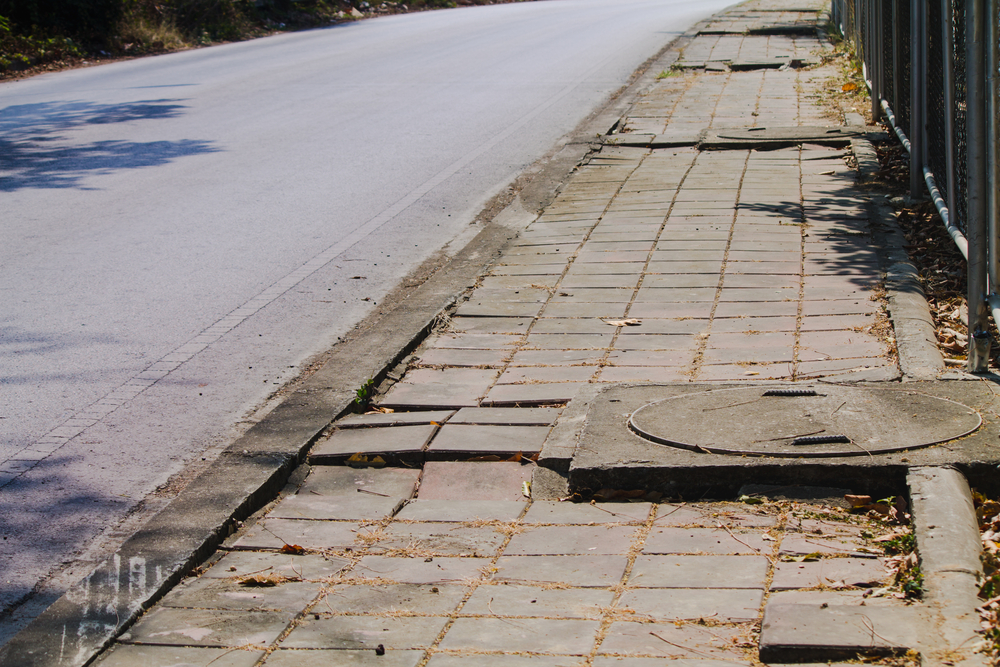
Cracked sidewalks, uneven pavement, raised tree wells, broken tiles, and damaged stairs cause trip-and-fall accidents that often produce serious injuries. NYC sidewalk inspection programs document many of these hazards over time.
Inadequate lighting
Poorly lit stairwells, hallways, and parking areas hide hazards that people would otherwise see and avoid. NYC building codes require minimum lighting standards in residential common areas and commercial spaces.
Missing or defective handrails
Stairs without handrails, with broken handrails, or with handrails on the wrong side produce serious fall injuries. The NYC building code sets specific requirements for handrail height, continuity, and graspability.
Who Is Liable for a NYC Slip-and-Fall Injury?
Liability for a NYC slip-and-fall depends on where the fall happened and who controlled the property. Possible defendants include property owners, business operators, tenants, building managers, contractors maintaining the property, and government agencies for falls on public property.
Property owners and landlords
Property owners are generally responsible for the condition of their property, including common areas, sidewalks, and any areas they retained control over. Landlords face liability for hazards in apartment building common spaces and exterior walkways.
Business operators and tenants
A business operating on someone else's property is responsible for keeping its customer-facing areas safe. The lease often determines whether the property owner or the business is liable for a particular hazard, but both can be sued at once.
Building managers and superintendents
Building managers and supers are responsible for the day-to-day maintenance of apartment buildings, including snow and ice removal, lighting, and repair of common areas. They are often directly liable as employees or contractors of the building owner.
NYC and government agencies
slip-and-fall accidents on government property, including parks, government buildings, NYCHA developments, and subway stations, require a Notice of Claim filed within 90 days. Missing this deadline can permanently bar the claim.
What Injuries Result From a Slip-and-Fall?
slip-and-fall injuries range from sprains and bruises to permanent disability. The most serious slip-and-fall cases involve head trauma, hip and pelvic fractures, spinal injuries, and complex fractures of the wrist, arm, or shoulder used to break the fall.
Head injuries and traumatic brain injury
Falls onto hard surfaces, especially backward falls onto pavement or concrete, cause concussions, skull fractures, and longer-term cognitive problems. Older adults face the highest risk, but younger people can sustain brain injuries from minor-looking falls.
Hip and pelvic fractures
Hip fractures are among the most serious injuries an older adult can sustain in a fall, often requiring surgery and long-term rehabilitation. According to the Centers for Disease Control and Prevention, falls cause more than 95 percent of hip fractures in older adults.
Spinal cord and back injuries
A fall onto the back or tailbone can cause herniated discs, vertebral fractures, and in serious cases, nerve damage that affects mobility long-term. Many back injuries from falls go undiagnosed at first and become apparent days later.
Wrist, arm, and shoulder fractures
People instinctively put their hands out to break a fall, which puts the wrist, arm, and shoulder at risk for fractures. Complex fractures often require surgery, hardware implants, and months of physical therapy.
Knee injuries and torn ligaments
Falls that twist or hyperextend the knee tear ligaments, including the ACL and meniscus. These injuries require surgical repair and rehabilitation, often with lasting effects on mobility.
Don't Let the Hazard Disappear Before You Document It
The wet floor that caused your fall gets mopped within minutes. The ice melts. The broken stair gets fixed. Without immediate documentation, the case becomes much harder to prove. Talk to a NYC slip-and-fall lawyer now.
Call (212) 406-1700 to preserve the evidence.
What Compensation Can You Recover for a NYC Slip-and-Fall?
A successful NYC slip-and-fall lawsuit can recover money for medical bills, lost wages, pain and suffering, and other long-term losses. Settlement values range widely depending on the severity of the injury and the strength of the evidence.
Medical bills and future care
Recovery covers emergency treatment, surgery, hospitalization, physical therapy, medication, and projected future medical needs. Serious slip-and-fall injuries can require care for years and produce six- or seven-figure medical costs.
Lost wages and lost earning capacity
Time missed from work during recovery, reduced future earnings if the injury prevents return to the same job, and lost benefits and bonuses are all recoverable. Lost earning capacity is often the largest line item in catastrophic slip-and-fall cases.
Pain and suffering damages
New York juries award pain and suffering for past pain, present limitations on daily life, and projected future suffering. These damages can substantially exceed medical bills when an injury is severe or permanent.
Long-term and permanent disability
slip-and-fall injuries that result in permanent disability, including limited mobility, chronic pain, and cognitive impairment, produce the highest settlements. The case is built around the projected lifetime impact on work, daily living, and quality of life.
Why Choose Our NYC Slip-and-Fall Lawyers at Washor Kool Sosa Maiorana & Schwartz, LLP
Our NYC slip-and-fall lawyers handle these cases through three commitments: aggressive evidence preservation in the first weeks after the fall, full investigation of the notice question that drives every slip-and-fall case, and willingness to take cases other firms turn down.
In our experience, slip-and-fall cases that look weak on day one are often strong by day thirty, once the surveillance footage comes back, the inspection records get subpoenaed, and the prior complaints surface. The case grows or shrinks with what the investigation finds.
We take slip-and-fall cases that other firms decline
Slip-and-fall claims are difficult, and many firms decline them without serious investigation. A New York slip-and-fall attorney with the resources to investigate properly can build a case that initially looks weak. Cases that seem unwinnable on day one often become strong with proper investigation.
Investigation that starts the day you call
Slip-and-fall evidence has a short shelf life. Surveillance footage, witness availability, and the physical condition of the hazard all change quickly. Our investigators move within hours of the call to lock in evidence before it disappears.
Track record across NYC slip-and-fall claims
As slip-and-fall lawyers in New York, our attorneys have recovered over $1 billion for injured clients and their families. Cases against commercial property owners, landlords, and NYC government agencies make up a substantial share of those recoveries.
Direct attorney attention on every case
You work with the attorneys handling your case, not paralegals or call-center staff. Major decisions, deposition strategy, and settlement negotiations stay with the lawyers who will try the case if it goes that far.
Frequently Asked Questions About NYC Slip-and-Fall Claims
How long do I have to file a slip-and-fall lawsuit in NYC?
Most NYC slip-and-fall lawsuits must be filed within three years of the accident. Claims against city or state agencies, including NYCHA, the MTA, and the Port Authority, require a Notice of Claim within 90 days and a lawsuit within one year and ninety days.
Can I sue for a slip-and-fall on a NYC sidewalk?
Yes. Adjacent property owners are generally responsible for maintaining NYC sidewalks under Administrative Code § 7-210. The exception is one-, two-, and three-family residential properties used solely as residences. For those properties, the city itself may bear responsibility for certain defects.
What if there were no witnesses to my fall?
Lack of witnesses does not defeat a slip-and-fall claim. The property owner's records, surveillance footage, the physical condition of the hazard, and your own testimony can all establish what happened. Many strong cases begin with no witnesses at all.
What if I were partly at fault for my fall?
New York follows comparative fault rules, which means your recovery is reduced by your percentage of fault but not eliminated. Even if you were 30 or 50 percent responsible, you can still recover a substantial portion of your damages.
Should I give a statement to the property owner's insurance company?
Not without an attorney. Insurance adjusters often call within days of the fall asking for a recorded statement. You are not required to give one, and what you say can be used to reduce or deny your claim.
Start Your NYC Slip-and-Fall Case Today
The case review is free. We pay all costs during the case. You owe nothing unless we recover money for you. Slip-and-fall cases have a three-year statute of limitations in most situations, but city and state cases require notice within 90 days.
Call (212) 406-1700 to get started.
Schedule a Free Case Evaluation
Washor Kool Sosa Maiorana & Schwartz, LLP
The Woolworth Building
233 Broadway, 18th Floor
New York, NY 10279