What rights do workers have after being hit by a falling object on a construction site in New York?
Being hit by a falling object on a construction site in New York usually triggers strict liability under Labor Law 240(1) when tools, materials, or debris fell because they were not properly secured.
The injured worker can sue the property owner and general contractor for full damages including pain and suffering, lost wages, and future medical costs beyond what workers' compensation pays.
What Should You Know?
- Labor Law 240 covers most cases: When tools, materials, or debris fell because they were not properly secured, the property owner and general contractor face strict liability.
- Not every falling object qualifies: The object must have required securing under safety regulations or been part of a hoisting operation.
- Injuries are often severe: A wrench falling 20 stories carries enough force to kill. Hard hats reduce risk but cannot prevent every injury.
- Multiple defendants are common: Property owners, general contractors, subcontractors, and equipment manufacturers can all face claims.
- Evidence disappears fast: The object, securing equipment, surveillance footage, and witness statements need preservation within days.
- Other Labor Law theories may apply: If §240(1) does not cover the falling object, the case may still involve Labor Law §241(6) for specific Industrial Code violations or Labor Law §200 for unsafe work-site conditions and negligence.
These takeaways apply to most New York falling object cases, but the specific facts of the overhead work, the securing equipment, and the parties on site shape what each case is worth.
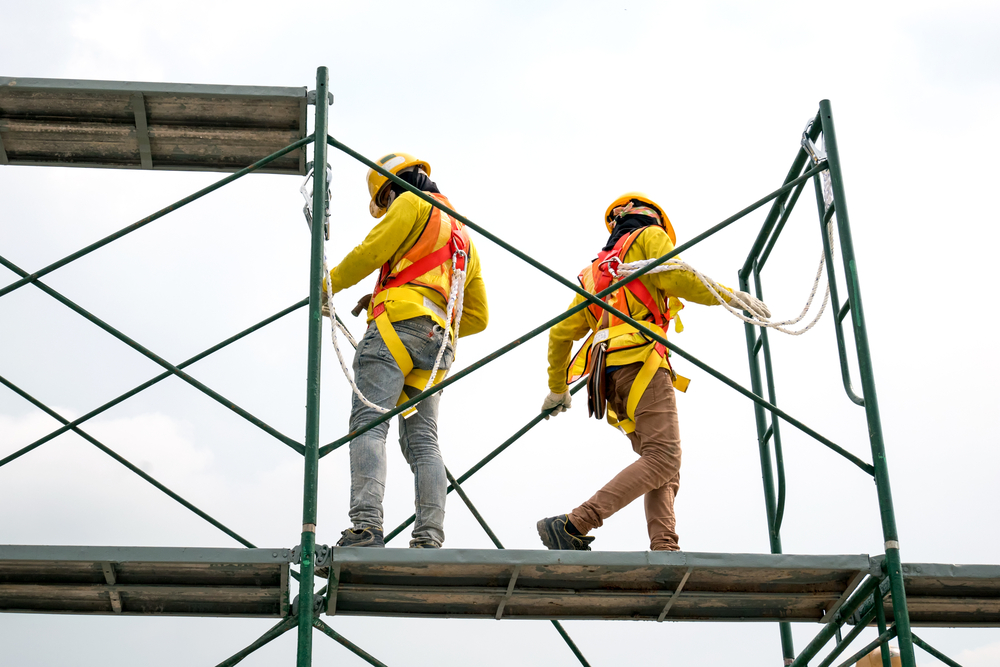
In our experience, the strongest falling-object cases often turn on evidence gathered in the first few days: what fell, where it was located before it fell, who controlled the overhead work, and whether toe boards, debris netting, tool tethers, or overhead protection were actually in place.
A falling object construction accident in NYC is one of the most dangerous workplace exposures in the construction industry. Objects come from above without warning, workers below have no time to react, and the injuries are often catastrophic even when the falling object seems small.
A falling debris construction site injury lawyer handles these cases because Labor Law 240 protections apply to many of them but the legal analysis is more technical than most other elevation-related cases.
The U.S. Bureau of Labor Statistics consistently identifies "struck by object" incidents as one of the top four causes of construction fatalities. NYC adds factors that increase the risk: dense urban sites with workers below scaffolding, tight spaces where falling materials cannot be redirected, and pressure to keep multiple trades working simultaneously at different elevations.
What Counts as a Falling Object Accident Under Labor Law 240?
A falling object accident under Labor Law 240 is one where an object fell from height and struck a worker because the object was not properly secured, hoisted, or protected against the risk of falling. The legal analysis turns on whether the object required securing under safety regulations.
What objects qualify under Labor Law 240?
Covered objects generally include:
- Tools being used at height: Hammers, wrenches, drills, and hand tools that workers were using when they fell or that fell during transport
- Materials being hoisted: Steel beams, lumber, drywall, and pipes in the process of being moved between elevations
- Debris from active demolition: Materials being removed during demolition, stripping, or repair work that were not contained
- Equipment components: Parts of scaffolding, crane attachments, or formwork that detached and fell
- Materials staged at height: Tools and materials placed on scaffolds or upper floors that required securing
The common thread is that the object was connected to construction activity at height and required securing to prevent the gravity-related risk.
What objects do not qualify?
Random debris that fell without connection to active construction work, objects that fell because of intentional acts unrelated to the work, and objects that were not required to be secured under safety regulations may fall outside Labor Law 240.
That does not necessarily end the case. A worker may still have a claim under Labor Law §241(6) when the accident involved a violation of a specific New York Industrial Code safety rule, or under Labor Law §200 when an owner, contractor, or other responsible party allowed an unsafe work-site condition or negligent work practice to cause the injury.
These fallback theories matter because unsafe construction sites can trigger different liability standards depending on what fell, why it fell, and what safety rules applied.
What Causes Falling Object Accidents on NYC Construction Sites?
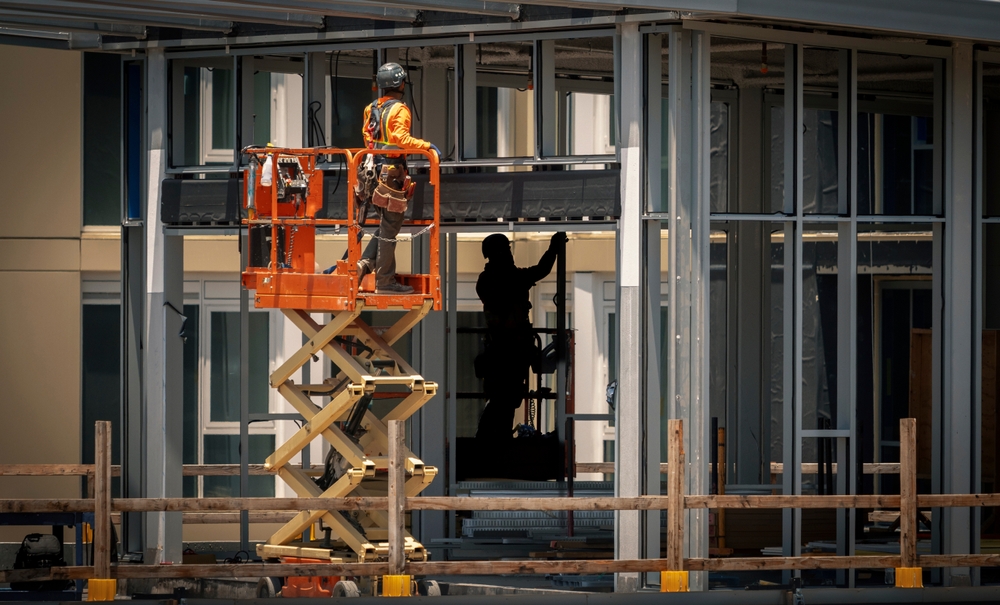
Falling object accidents on NYC construction sites usually trace to inadequate securing of tools and materials, missing protective barriers, hoisting failures, or pressure to work below active overhead operations without proper protection.
Inadequate securing and missing protective barriers
Workers at height routinely place tools on ledges, hang them from belts, or set materials on platforms without securing them properly. Scaffolds and platforms should have toe boards, debris netting, and overhead protection for workers below. When securing practices fail or protective barriers are missing, dropped items can fall freely to workers below.
Hoisting and rigging failures
Materials being moved between elevations through crane hoists, mast climbers, or other lifting equipment can fall when rigging fails, slings break, or loads become unbalanced. Hoisting failures often produce the most severe falling object injuries because of the size and weight of the materials involved.
Pressure to work below active operations
Tight schedules push site managers to keep multiple trades working simultaneously at different elevations. Workers performing finish work, electrical, or plumbing work below active overhead operations face significant exposure when no overhead protection is provided. Weather conditions also dislodge inadequately secured materials.
How Does Labor Law 240 Apply to Falling Object Cases?
Labor Law 240(1) imposes strict liability on property owners and general contractors when a covered falling object accident happens because proper safety devices were not provided. The worker does not have to prove the defendants were negligent.
| Falling Object Scenario | Labor Law 240 Coverage |
| Tool falls from worker at height | Yes, when tool tethering or toe boards were absent |
| Material falls during hoisting | Yes, when rigging failed or load was inadequately secured |
| Debris falls from active demolition above | Yes, when debris netting or barriers were missing |
| Equipment component detaches and falls | Yes, when securing equipment failed |
| Random debris of unknown origin | Possibly not, depends on connection to active work |
| Object falls because of intentional misconduct | Possibly not, may proceed under negligence instead |
Why is the required to be secured element important?
Not every falling object case triggers Labor Law 240. Courts have ruled that the falling object must have been the kind required to be secured under safety regulations or as part of a hoisting operation. A loose nail that fell off a partly assembled wall framework may not qualify. A wrench that fell because the worker was not wearing the required tool tether typically does.
What about workers wearing hard hats?
Hard hats reduce but do not eliminate falling object injuries. The presence of a hard hat does not bar a Labor Law 240 claim when the injury was caused by an object that should have been secured. Hard hats often reduce the severity of head injuries but cannot prevent injuries to the face, shoulders, or back from larger or heavier falling objects.
Do Labor Law §241(6) and §200 Apply to Falling Object Cases?
Yes. Labor Law §240(1) is the strongest framework for many falling-object cases because it applies when an object that should have been secured fell due to missing or inadequate safety devices. But if the object does not qualify under §240(1), the case may still proceed under Labor Law §241(6) or Labor Law §200.
Section 241(6) focuses on violations of specific New York Industrial Code safety rules, including rules involving debris protection, overhead hazards, hoisting, and construction-site safety practices. Section 200 covers general negligence, including unsafe site conditions and negligent methods of work. In plain terms, §240(1) covers gravity-related safety failures, §241(6) covers specific safety-rule violations, and §200 covers unsafe work-site conduct or conditions.
What Injuries Result From Falling Object Accidents?
Falling object accidents produce a wide range of injuries depending on the size of the object, the height from which it fell, and where it struck the worker.
Traumatic brain and spinal injuries
Head impact from falling objects routinely produces traumatic brain injuries even when workers wore hard hats. The Centers for Disease Control and Prevention tracks long-term TBI outcomes that demonstrate the lasting cognitive impairment these injuries can produce.
Falling objects striking the head, neck, or upper back can also produce vertebral fractures, herniated discs, and in serious cases permanent paralysis.
Crush injuries and broken bones
Larger falling objects can produce crush injuries to limbs, the torso, or internal organs. Crush injuries often require emergency surgery and can result in amputation when the damage compromises circulation. Falling objects also routinely produce broken arms, shoulders, collarbones, and ribs in workers who instinctively try to shield themselves.
Penetrating and fatal injuries
Sharp objects or heavy objects falling from significant heights can produce penetrating injuries that damage organs, sever blood vessels, or cause severe lacerations. Falling object accidents also produce a significant share of construction fatalities each year. Wrongful death claims allow surviving family members to recover under New York's wrongful death statute.
Who Is Liable in a Falling Object Accident in New York?

Liability in a falling object accident in New York can fall on the property owner, the general contractor, the subcontractor performing the overhead work, equipment manufacturers, and rigging companies. Most cases involve multiple defendants.
Can property owners and general contractors be responsible?
Owners and general contractors face strict liability under Labor Law 240 when proper safety devices were not provided to protect workers from falling objects. The duty cannot be transferred through contract language to subcontractors.
Subcontractors, rigging companies, and equipment manufacturers
The subcontractor whose workers dropped the tool, lost control of the material, or failed to secure equipment can face direct negligence claims. Rigging companies that performed the hoisting work can face similar claims when their work contributed to the accident.
When defective tools, rigging components, or safety equipment contributed, the manufacturer can face product liability claims that often add significant coverage in serious injury cases.
What Compensation Is Available After a Falling Object Accident?
A successful falling object case can recover three categories of damages: workers' compensation benefits, third-party Labor Law lawsuit damages, and product liability damages when defective equipment was involved.
Workers' compensation benefits
Workers' compensation pays medical bills and a portion of lost wages regardless of fault but does not cover pain and suffering or full lost earnings. According to the New York State Workers' Compensation Board, wage replacement is capped at two-thirds of the worker's average weekly wage.
Third-party Labor Law and product liability damages
The Labor Law 240 lawsuit against the property owner, general contractor, and other non-employer parties can recover the full range of damages including past and future medical expenses, full lost wages, lost earning capacity, pain and suffering, and loss of enjoyment of life.
When defective products contributed to the accident, the manufacturer can be liable alongside the other parties. For severe falling object injuries, third-party recoveries routinely exceed workers' compensation by a wide margin.
Wrongful death damages
When a falling object accident kills a worker, surviving family members can recover funeral costs, lost financial support, and loss of guidance for surviving children under New York's wrongful death statute.
Frequently Asked Questions About Falling Object Accidents on NYC Construction Sites
How long do I have to file a falling object lawsuit in New York?
Most New York falling object lawsuits must be filed within three years of the accident. Claims against NYC, NYCHA, the MTA, the Port Authority, or other government entities require a Notice of Claim within 90 days and a lawsuit within one year and 90 days. Missing these deadlines typically ends the case.
What if I cannot identify what fell or who dropped it?
Identification of the specific object and the responsible party is part of the investigation work. When we investigate falling-object accidents, we look for the object itself, incident reports, daily logs, subcontractor records, site photos, surveillance footage, and witnesses who saw the overhead work.
Early investigation often establishes what fell and who controlled the area even when the injured worker did not personally see the object come down.
What if I was wearing a hard hat when the object hit me?
Wearing a hard hat does not bar a Labor Law 240 claim. The duty to provide protection from falling objects extends beyond hard hats to include toe boards, debris netting, overhead barriers, and proper securing of materials.
Legal Solutions Are Just a Call Away

A falling object accident is rarely the fault of the worker who was hit. The object came from work being performed above by other parties with securing equipment that should have prevented the fall. When the protection fails, New York law shifts responsibility onto the parties with the power to prevent the accident.
What would full recovery look like in the specific circumstances of your falling object accident? The answer depends on what fell, where it came from, who was working above, what securing equipment was provided, and the nature of the injuries.
If you or someone you know has been hit by a falling object on a NY construction site, the attorneys at Washor Kool Sosa Maiorana & Schwartz, LLP can review the facts and explain what protections apply. Call (212) 406-1700 for a free case evaluation.