Labor Law 240(1) and 241(6) look simple on the page. In practice, the appellate courts refine what those statutes actually cover almost every month, and a decision from the Court of Appeals or an Appellate Division can change how a pending case gets argued overnight. This update covers three recent New York Labor Law appellate decisions that construction accident attorneys and injured workers should know about.
What Did Recent Labor Law Appellate Decisions Change?
Recent New York appellate decisions have clarified three recurring Labor Law questions: the Court of Appeals narrowed which Industrial Code provisions are specific enough to support a Section 241(6) claim, while the Appellate Division issued rulings on when a permanent stairway counts as a safety device and when a ladder fall triggers Section 240(1) liability. Each decision changes how a construction accident claim should be built and argued.
Key takeaways
- The Court of Appeals resolved a long-running split among the Appellate Division departments over whether a common excavation-safety regulation is specific enough to support a Labor Law 241(6) claim, and it ruled against plaintiffs.
- The First Department clarified that a permanent stairway can itself be a "safety device" under Labor Law 240(1) when it is the only way to reach an elevated work area.
- The Second Department restated a clean rule for ladder-fall cases: if the ladder moved, slipped, or collapsed for no apparent reason, the injured worker is entitled to summary judgment. If the worker simply lost balance on a ladder that was not defective, liability does not attach.
What Did the Court of Appeals Decide About Industrial Code Section 23-4.2(k)?
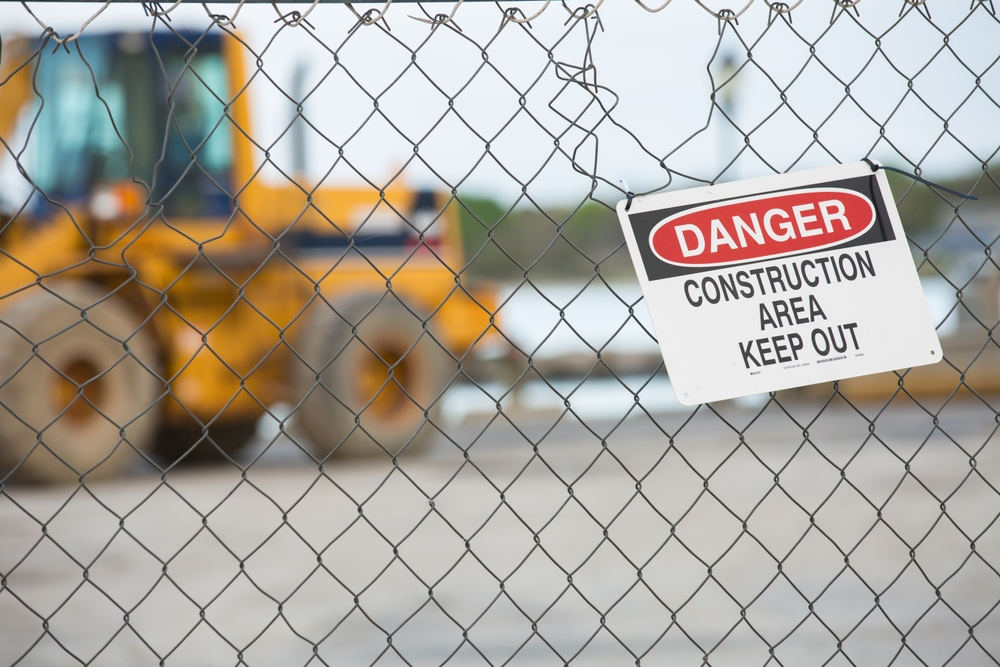
A Labor Law 241(6) claim only survives if it rests on an Industrial Code provision that gives owners and contractors a specific, positive command, not just a general safety principle. For years, the Appellate Division departments disagreed about one commonly cited excavation regulation, Industrial Code Section 23-4.2(k), which states that workers may not be permitted in an area where they could be struck by excavation equipment or material dislodged by it. The Second Department had allowed claims based on that provision. The First, Third, and Fourth Departments had rejected them.
The Court of Appeals resolved that split in a case involving a drill blaster struck by a nearby excavator during a Manhattan excavation project. In a 4 to 3 decision, the Court held that Section 23-4.2(k) merely identifies a danger without prescribing any specific means of avoiding it, and that this kind of broad safety concern cannot support a Labor Law 241(6) claim. The ruling directly overturns the more permissive rule the Second Department had followed for years, meaning cases built on that Industrial Code section in Brooklyn, Queens, or elsewhere within the Second Department now face the same barrier that has applied statewide.
What this means for a pending or future claim:
- A Labor Law 241(6) claim can no longer rely on Section 23-4.2(k) alone anywhere in New York, including in the Second Department
- Attorneys handling excavation and heavy-equipment injury cases need to identify other, more specific Industrial Code provisions, or build the case around Labor Law 200 and common-law negligence instead
- The decision is a reminder that Section 241(6) turns on the exact wording of the regulation cited, not just on whether a hazard clearly existed
When Does a Permanent Stairway Count as a Labor Law 240(1) Safety Device?
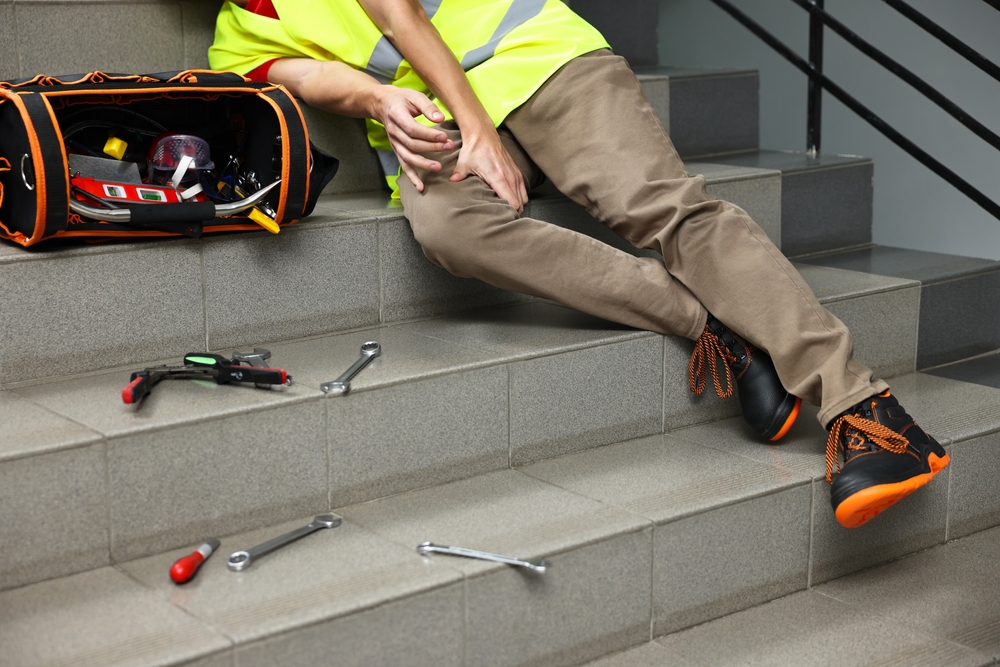
Labor Law 240(1) is usually associated with ladders, scaffolds, and hoists, not staircases that are part of the building itself. A recent First Department decision addressed what happens when a permanent stairway is the only practical way for a worker to reach an active work site.
The court held that a permanent stairway serving as the sole viable means of access to a work area is a "safety device" within the meaning of the statute, rejecting the argument that a plaintiff using a stairway as a passageway falls outside Labor Law 240(1) protection altogether. The decision also allowed related claims under Labor Law 241(6), based on Industrial Code Section 23-1.7(d) covering slipping hazards, and under Labor Law 200 and common-law negligence, to proceed.
- The ruling matters most for injuries on stairs at active construction and renovation sites where no alternative safe route existed
- It does not convert every staircase into a Labor Law 240(1) device. The stairway has to be functioning as the access route to elevated or below-grade work, not simply a walkway a worker chose to use
- Multiple causes of action, common-law negligence, Labor Law 200, and Labor Law 241(6), can proceed together with a Labor Law 240(1) claim when the facts support each
A ruling like this changes how a stairway fall case gets pled from day one. Call (212) 406-1700 for a free case review, 24 hours a day, 7 days a week, or request a free case review online to have your case evaluated under the current law.
When Does a Ladder Fall Trigger Labor Law 240(1) Liability?
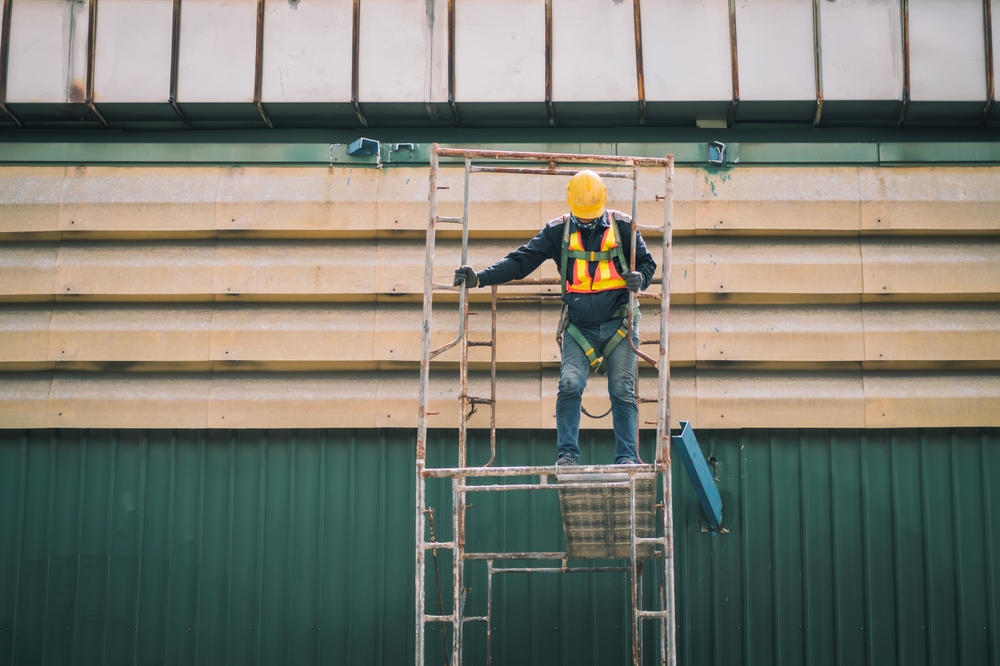
Ladder-fall cases are among the most common Labor Law 240(1) claims, which raises the recurring question of how Labor Law 240 and 241(6) differ, and the Second Department recently laid out the governing rule in especially clear terms. To establish a Labor Law 240(1) violation in a ladder case, there must be evidence that the ladder was defective or inadequately secured, and that the defect was a substantial factor in causing the fall.
The court explained the practical dividing line: when a ladder slides, shifts, tips over, or otherwise collapses for no apparent reason, that alone creates a presumption that the ladder did not provide proper protection, entitling the injured worker to summary judgment. By contrast, when a worker falls from a ladder simply because they lost their balance, with no evidence the ladder itself was defective or inadequately secured, Labor Law 240(1) liability does not attach.
- Worker testimony describing the ladder moving, sliding, or shifting, with no explanation from the defense, generally supports summary judgment for the worker
- A stable, properly positioned ladder from which a worker simply fell due to a loss of balance does not, by itself, establish a violation
- This distinction is exactly where defense counsel focuses discovery: pinning down precisely what the ladder was doing at the moment of the fall
Why These Decisions Matter for an Active Construction Accident Case
Appellate decisions like these are not academic. They change what evidence needs to be gathered in the days and weeks after an accident, and they change how a case gets pled from the outset.
- The Industrial Code sections cited in a Labor Law 241(6) claim need to be reviewed against current appellate authority, not just the regulation's text, since some once-viable provisions no longer support a claim.
- A fall involving a permanent structure, a stairway, a fixed ramp, a catwalk, should be evaluated for whether that structure was functioning as the only means of access to the work, which can open a Labor Law 240(1) claim that might otherwise be missed.
- A ladder-fall case needs specific, detailed testimony about what the ladder did in the instant before the fall, since that detail is now explicitly the line between summary judgment and a factual dispute that goes to a jury.
Frequently Asked Questions About These Labor Law Decisions
Does the Court of Appeals decision on Section 23-4.2(k) end all excavation-related Labor Law claims?
No. It eliminates one specific Industrial Code provision as a basis for a Labor Law 241(6) claim. Excavation accidents may still support claims under other Industrial Code sections, under Labor Law 240(1) when an elevation-related risk is involved, or under Labor Law 200 and common-law negligence when the owner or contractor had control over the hazard.
Does the stairway decision mean every fall on a staircase at a construction site is covered by Labor Law 240(1)?
No. The decision applies where the stairway was the sole viable means of access to an active work area. A fall on a staircase unrelated to reaching an elevated or below-grade work site, or where a safer alternative route existed, is evaluated differently.
What should I do if I already have a pending case that might be affected by these rulings?
Have the specific Industrial Code sections and legal theories in your case reviewed against this current authority as soon as possible. A claim resting on a since-narrowed provision may need to be amended or supplemented with additional theories before it becomes a problem at summary judgment.
Our Attorneys Track Every Labor Law Decision That Could Affect Your Case

New York's appellate courts issue Labor Law decisions on a near-constant basis, and a single ruling can add or remove a viable theory from a pending case. As New York construction accident representation, we at Washor Kool Sosa Maiorana & Schwartz, LLP build every case against the current state of the law, not the law as it stood when the injury happened.
Our attorneys have recovered over $1 billion in verdicts and settlements, and construction accident litigation under Labor Law 240, 241(6), and 200 is our firm's core practice. Call our New York Labor Law attorneys at (212) 406-1700 any time, day or night, for a free case review.
This article is for informational purposes and is not legal advice. Every case depends on its own facts.
Washor Kool Sosa Maiorana & Schwartz, LLP
2124062313Attorney Advertising. Prior results do not guarantee a similar outcome.